Pale, soft potatoes are what you get when home fries go into the pan wet. Diner style home fries need a quick parboil, a proper dry, and a hot skillet that is left alone while the crust forms.
Start with the fundamentals below, and see more home cooking basics for beginners for the techniques that carry over to other pan-cooked dishes.
What makes home fries diner-style
Home fries show up on just about every roadside diner menu in America, according to Pesto and Potatoes. Jennie’s Kitchen describes the diner version as potatoes seasoned with salt, pepper and smoked paprika, tender but holding their shape, and studded with softened bits of onion and bell pepper. Four elements define the result: the right potato, a boil before the pan, a dry surface, and patient pan contact. Most disappointing batches come from habits that feel sensible but work against browning.
| Common assumption | What actually happens | Planning use |
|---|---|---|
| Raw potatoes can go straight into the skillet. | A twice-cooked method, a quick boil and then pan cooking, gives a fluffy texture that roasting or sautéing alone does not. | Parboil every batch before it meets the pan. |
| Boiled potatoes are ready to fry once drained. | Water on the surface turns to steam and slows browning. | Let the drained potatoes steam dry before frying. |
| Stirring often keeps the potatoes from sticking or burning. | The potatoes need a few minutes of contact with the pan to brown, and leaving them alone builds the crust. | Stir sparingly, only when the underside has colored. |
| Butter is the classic fat. | The milk solids in butter can scorch at the heat browning needs; ghee has a higher smoke point. | Choose ghee or oil for the main cooking. |
The pattern comes from Pesto and Potatoes and the twice-cooked approach at Jennie’s Kitchen.
Choosing potatoes: Russet or Yukon Gold
Russet potatoes are the safest choice for home fries, and Yukon Gold is a reasonable alternative if you prefer a different flavor. The decision comes down to what you want from the interior and the taste.
- Russet potatoes: The recipe at She Likes Food prefers them because their flavor is like a blank canvas, so the paprika and garlic stay in front. Pesto and Potatoes adds that russets give softer centers. Choose them for the classic crisp edge around a soft middle.
- Yukon Gold: It is also a great option, although it tends to be sweeter in flavor. Choose it if you like that sweetness against salty breakfast meats.
- Cut and quantity: One batch in the Pesto and Potatoes recipe uses 1½ pounds of russets, about 3 medium, peeled and cut into 1-inch cubes. Keep the pieces to one size so they finish at the same time.
Parboiling and drying: should you boil first?
Yes, parboil the potatoes first. Pesto and Potatoes boils the cubes for 3 minutes, until just fork-tender on the outside but still firm in the center. A firm center matters because the pan finishes the cooking. Potatoes boiled until soft will fall apart when flipped.
Jennie’s Kitchen calls the twice-cooked method the trick to great home fries, and notes that it lends a fluffy texture. After boiling, drain the potatoes in a colander and let them steam dry for 2 minutes. This short wait is the step most often skipped, and it directly affects crispness because wet surfaces steam in the pan instead of browning.
Skillet, fat and heat
A 12-inch nonstick or cast iron skillet fits the 1½-pound batch in a single layer, per Pesto and Potatoes. Cast iron holds heat well, and Jennie’s Kitchen uses a cast iron skillet for its batch. The one-layer rule is the main reason to size the pan to the batch. Potatoes piled on top of each other are no longer in contact with the metal, and that contact is what browns them.
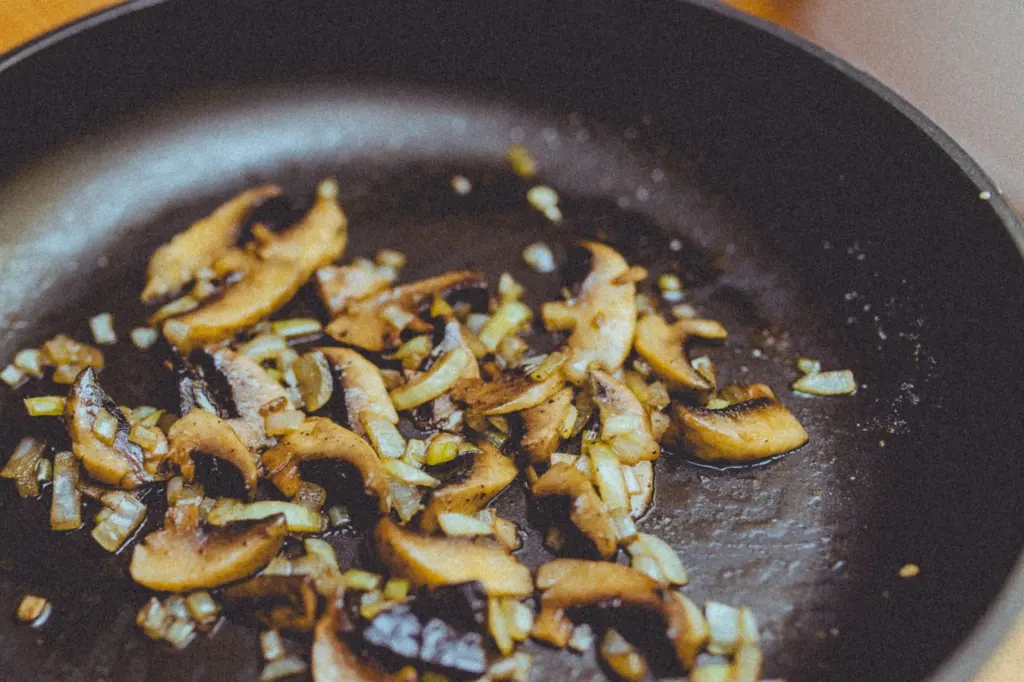
For fat, the same recipe uses 2 tablespoons of olive oil and 2 tablespoons of ghee for 4 servings. It recommends ghee for its higher smoke point, since butter’s milk solids can scorch at the heat the potatoes need. Butter can still add flavor, but treat it as an extra rather than the cooking fat.
Timing the pan stages
- Fry first. Fry for about 10 minutes over medium-high heat, flipping every few minutes, until the potatoes start to brown.
- Finish hot. Increase the heat slightly and cook 3 to 5 minutes longer, until the edges are crisp and scraggly.
- Serve right away. The crust is at its best straight from the pan.
The hands-off principle behind these timings holds across recipes. She Likes Food tells the cook to let the potatoes sit for about 3-4 minutes without touching them. If you are tempted to stir, remember that the crust forms only where potato meets pan.
Onions and peppers
Onions and bell pepper are what separate a diner plate from plain fried potatoes. Jennie’s Kitchen describes the potatoes as studded with softened bits of onion and bell pepper. It sautés the peppers and onions as their own step, once the potatoes are cooked and drained, rather than cooking everything in one crowded mass. Treat the vegetables as a separate task and combine them with the potatoes at the end. The potatoes then keep the pan contact they need.
Seasoning: what diners use
The core diner seasoning is salt, pepper and paprika. She Likes Food states that the paprika is key to giving the potatoes a nice golden-orange color, and Jennie’s Kitchen uses smoked paprika for a smokier edge. Choose sweet or smoked paprika by the flavor you want. Both recipes also add garlic or onion in powder form.
- Pesto and Potatoes: For 4 servings, it uses 1 teaspoon kosher salt (plus more to taste), ½ teaspoon black pepper, ½ teaspoon garlic powder and ½ teaspoon onion powder. See the full recipe.
- She Likes Food: It uses 1½ teaspoons paprika, 1 teaspoon granulated garlic and ¼ teaspoon cumin, with salt and pepper to taste.
The two recipes are scaled to their own batches, so use the amounts as ratios rather than mixing them. A good starting point for a first batch is salt, pepper and paprika, with garlic and onion powders if you want a rounder savory flavor. Taste a piece before you serve and adjust the salt.
Serving at breakfast
Home fries are great as a breakfast side dish, according to She Likes Food. They sit comfortably beside whatever else is on the plate, and a cast iron skillet is attractive enough to bring to the table. Keep the crisp potatoes uncovered until serving, because trapped steam softens the crust.
Once the potato technique feels familiar, the same attention to hot pans and dry ingredients is useful elsewhere. Try the approach in Chinese Fried Rice Restaurant Style: How To Recreate Takeout-Quality Fried Rice At Home – Bionicbites, or the high-heat cooking in How To Make Hibachi At Home: Restaurant-Style Japanese Grilling Made Easy (2026) – Bionicbites.
Frequently asked questions
| Question | Answer |
|---|---|
| Can I skip boiling the potatoes? | You can swap the boil for a microwave precook. She Likes Food cooks the potatoes for about 2-3 minutes, flips them, and cooks about 2 minutes more before they go in the pan. |
| What is the best way to reheat leftovers? | Use the oven. She Likes Food says it is probably the best bet for getting leftover home fries crispy again. |
| What else can I do with home fries besides serving them as a side? | Add them to breakfast burritos and tacos, as suggested by She Likes Food. |
| How long does a batch take? | The She Likes Food recipe lists 5 minutes of prep and 25 minutes of cooking, covering the microwave precook and the stovetop. |