It is a weeknight, nothing is planned, and the takeout menu is open. Home cooking basics for beginners solve that: learn to cut evenly, own a few pans, and repeat simple dishes until cooking becomes a habit.
This guide sorts the basics by what you want to do tonight. Pick a route below, stock the kitchen using the pantry staples list, and follow the links to full technique pages when a topic deserves more depth.
Choose your route
You do not need to master everything before you cook dinner. CourseHorse’s guide to learning basic cooking groups the essentials into knife skills, knowledge of kitchen equipment and food preparation. That makes a workable checklist for your first weeks, and the routes below arrange those areas by goal.
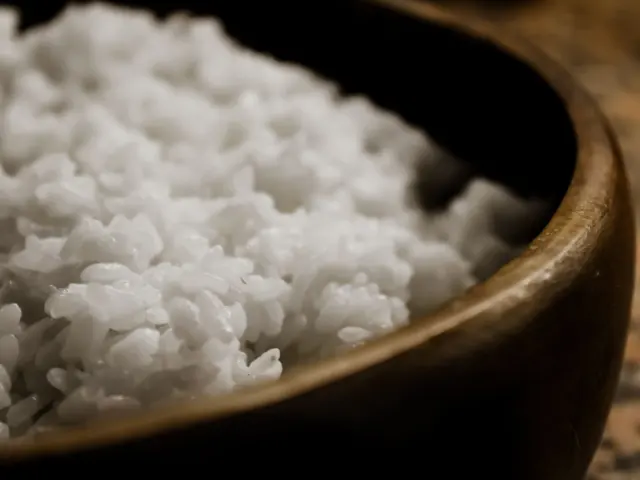
- Brand new to the kitchen: Read the equipment and knife sections, then practise the stovetop habits. After that, add the staples that fill most plates: how to cook rice on the stove, how to cook pasta perfectly and how to cook eggs.
- Short on time on weeknights: Jump to the planning section, which covers preparation before the heat goes on, cooking in bulk and a realistic time target.
- Nervous about meat and roasts: Go straight to the roasting and thermometer section. Knowing how much temperature a piece gains after leaving the oven removes most of the guesswork.
- Craving restaurant favorites: Skip to the final section, where takeout and restaurant dishes are sorted into home projects.
Choose one route and stay with it for a few weeks. Cooking improves through repetition, and sampling every route at once spreads that repetition too thin to build any habit.
Starter equipment: what to buy first
A beginner kitchen needs less than most shopping lists suggest. Premio Foods’ advice on teaching yourself to cook at home is that all you need at first is the bare minimum of cooking supplies, and it names a short list of knives and pans. Buy that list, cook with it for a while, and let real frustrations decide what comes next.
Knives
Premio Foods names a chef’s knife, a paring knife and a serrated bread knife as all the cutlery you will need. If budget is limited, start with the chef’s knife and add the others when a recipe or a loaf of bread calls for them. That ordering is a judgement call, not a rule from the source. When comparing chef’s knives in a shop, PastryChefOnline suggests looking for a full tang, meaning the blade extends down into the entire length and breadth of the handle, which it links to better balance. Check the tang before you check the brand name.
Pans and pots
Two beginner lists overlap closely on cookware. The table below compares the pieces they name, so you can see which are agreed and which are optional.
| Pan or pot | Named on beginner lists | Planning use |
|---|---|---|
| Frying pan | Both lists | The pan to buy first. It suits the heat-first, leave-it-alone browning routine covered below. |
| Saute pan | Premio Foods | Listed alongside the frying pan. If budget is tight, begin with the frying pan and add this once you want both. |
| Saucepan | CourseHorse | A natural fit for stovetop sides such as rice. |
| Stockpot | Both lists | Pairs with stock making and cooking in bulk, so it can wait until you start either. |
| Cast iron skillet | Premio Foods | Worth buying if you want to sear. Learn how to season a cast iron skillet before the first use. |
The pans come from Premio Foods and CourseHorse, which both treat the stockpot and frying pan as core.
CourseHorse also lists stirring spoons, tongs and mixing bowls. Those cost little and get used every session, so buy them before any gadget. Plan on a kitchen thermometer once you begin roasting, and a cast iron skillet when searing becomes a regular habit.
Knife skills: cut evenly before you cut fast
The most useful knife habit for a beginner is cutting food into even pieces. PastryChefOnline says that even pieces, rather than just madly chopping, will serve you better in the long run, because evenly cut food cooks at the same rate. The reverse is easy to picture: when pieces differ in size, the small ones overcook while the large ones are still underdone.
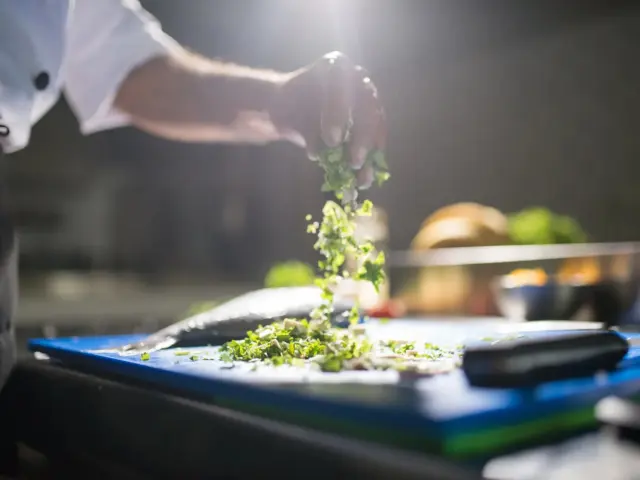
That makes speed a poor target for the first weeks. Aim for consistent size, then let pace follow naturally as the movements become familiar. Cut everything before the pan is hot, so you are never chopping while something browns, and so the sizes can be compared side by side on the board.
- Keep the edge in shape: A dull knife makes even cutting harder. How to sharpen kitchen knives at home explains the routine.
- Choose a surface you will use: A board that stays put and is easy to clean beats an expensive one that lives in a cupboard. Compare options in wood vs plastic cutting board.
- Practise on ingredients you will actually eat: Onions, carrots and celery come up constantly, and the base they form is covered later. Garlic needs its own handling, which is why how to cook with garlic sits apart from general knife work.
With the cutting done and the pieces sized, the next skill is what happens when they hit the pan.
Sauteing and searing on the stovetop
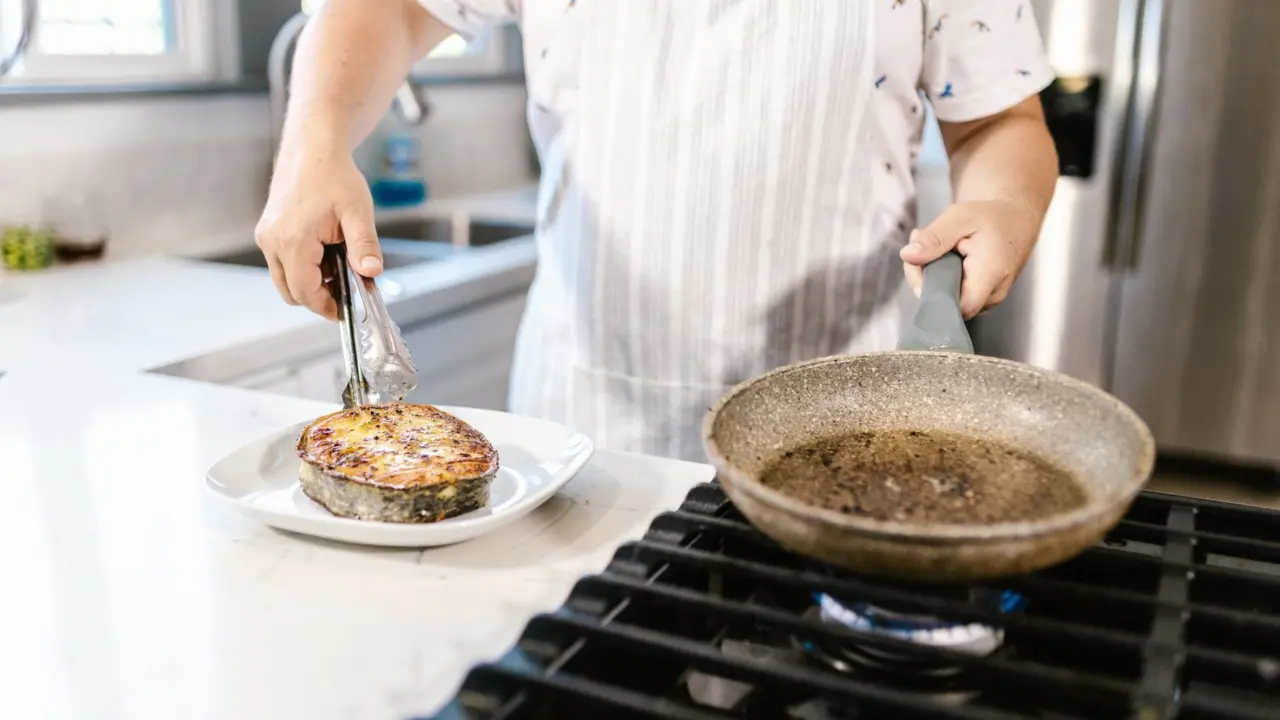
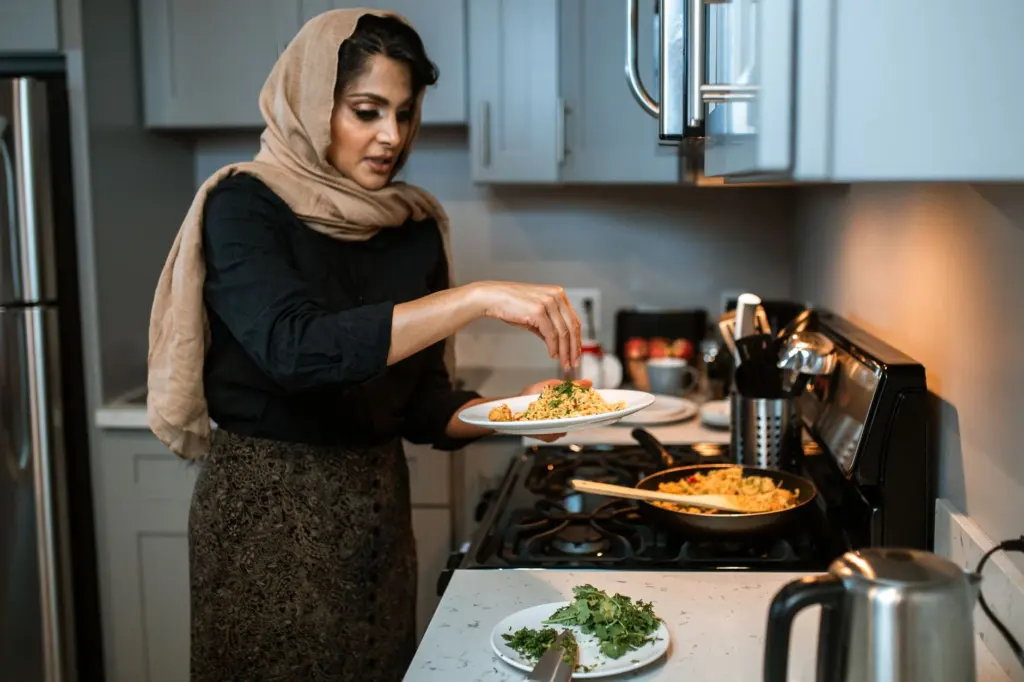
Stovetop cooking rewards a short list of habits, and PastryChefOnline states them plainly. Heat the pan first, then add the fat, then add the food. Food added to a cold pan with the fat is more likely to stick, which is the order’s purpose.
Next, leave the food alone. The same source says that if you want food to brown, you need to just leave it alone. In practice that means waiting a couple of minutes before turning, which also gives the food time to release from the pan. Beginners tend to stir constantly because it feels productive. Browning needs contact, so stirring works against it.
From browning to a pan sauce
The browned bits left in the pan are the start of a sauce. PastryChefOnline describes pan sauce as beginning by deglazing the pan with about 1/2 cup of liquid. The full method, with options for the liquid, is in how to deglaze a pan.
Choosing the next technique
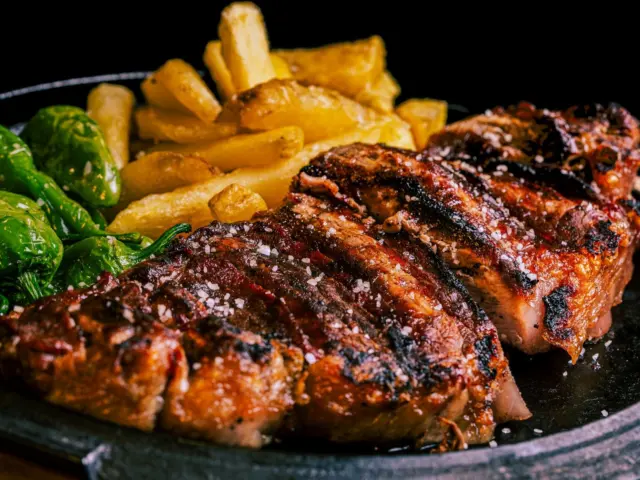
- You want a browned crust on meat: Read how to sear meat. If steak is the goal, how to cook steak on the stove adds timing by thickness and doneness.
- You want a fast vegetable dish: How to stir fry vegetables tackles the most common beginner problem, soggy results.
- You want a savory base for soups and sauces: How to caramelize onions covers timing and heat for onions.
- You are cooking ground meat: How to brown ground beef covers fat percentage and technique.
Roasting and the kitchen thermometer
Roasting leaves less room for guesswork than stovetop cooking, because food keeps cooking after it leaves the oven. PastryChefOnline puts the extra rise from carryover cooking at only about 3°F for small cuts such as chicken breasts. For large roasts and turkeys, it says the temperature can rise an additional 10 to 20°F.
The size of the piece therefore decides how much margin to leave. A small cut can come out close to its target, while a large roast needs to come out well before it, then rest. For turkey, the author advises taking it out of the oven when the thigh meat hits about 160°F and letting it rest. Treat that as one cook’s guidance for that bird, and check safe internal temperatures for each type of meat against official food safety guidance before relying on any pull temperature.
A kitchen thermometer is the tool that makes these numbers usable, since timing alone cannot account for the size of the piece in your oven. How to use a meat thermometer explains reading and placement, and carryover cooking goes deeper on when to pull meat from the heat.
What to roast first
- Vegetables for a low-risk start: No resting calculation applies. How to roast vegetables gives temperatures, times and tips.
- A whole chicken as the next challenge: It combines timing, resting and a thermometer in one dish. See how to roast a whole chicken.
- Tough cuts when you have an afternoon: How to braise meat covers cuts, liquid and time. For hands-off appliances, slow cooker vs pressure cooker helps you choose between them.
Flavor bases, sauces and pantry building blocks
Many dishes begin with a base of aromatic vegetables. In France, PastryChefOnline notes, that base is mirepoix, made of onions, celery and carrots. It also rewards the even cutting practised earlier. Other cuisines have their own versions, and what is mirepoix compares it with soffritto and sofrito.
Past the base, a handful of techniques recur constantly, so learn them as needed rather than all at once:
- Sauces that behave: When a sauce, soup or gravy is too thin, how to thicken a sauce lays out the options. How to make a roux goes further into a smooth béchamel.
- Dressings without a recipe: The basic vinaigrette ratio lets you build a dressing from what is in the kitchen.
- Stock and beans from scratch: How to make chicken stock covers storing it safely, and how to cook dried beans covers legumes.
- Seasoning and fats: Kosher salt vs table salt explains which salt to cook with, and the cooking oil smoke point chart helps you pair oils with heat levels.
- Herbs: Use fresh herbs vs dried herbs conversion when a recipe calls for one and the pantry holds the other. Keep fresh herbs from wilting with how to store fresh herbs.
When you scale up a dish for guests or batch cooking, how to double a recipe explains what changes beyond the quantities, and cooking measurement conversions handles unit swaps. Those techniques keep a plan workable on a busy night, which is the topic of the next section.
Planning quick weeknight meals
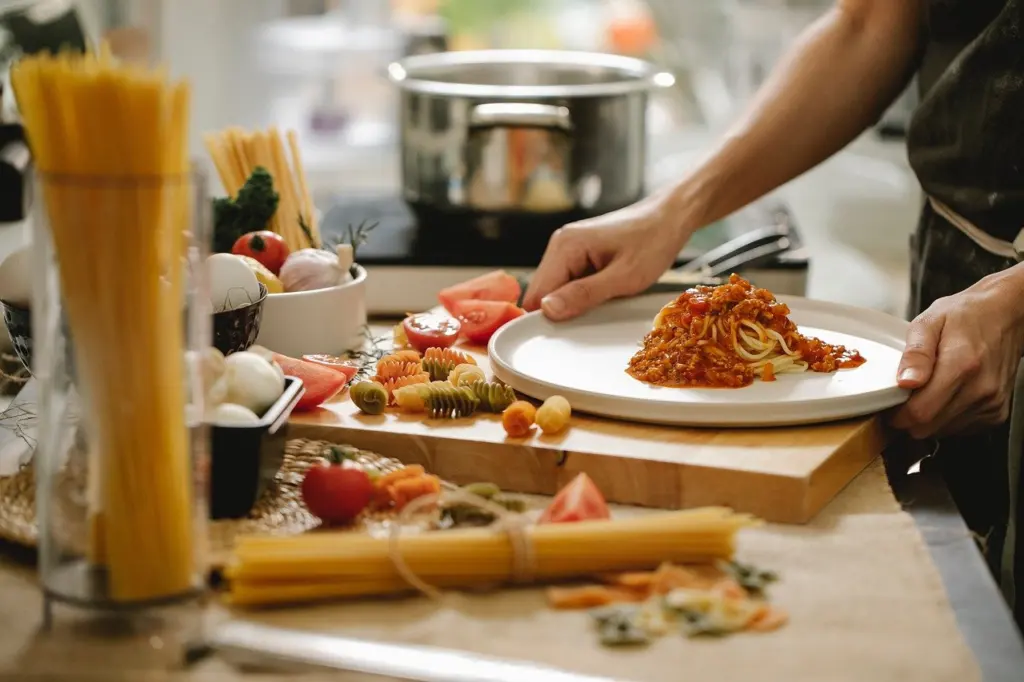
Fast dinners come from preparation, not speed. Premio Foods’ guidance is to get out all the supplies you will need and measure all your ingredients before you begin, the habit cooks call mise en place. Premio Foods also recommends cooking some meals in bulk so you have leftovers to store in the freezer for busy days. Together, those two habits move the work off the weeknight itself.
Foodist Kitchen’s author sets the goal as getting a tasty, healthy meal on the table in about half an hour, and says that becomes realistic once cooking turns into a habit. Treat that as the author’s target, not a promise for a first attempt. Early dinners will run longer while you learn where everything lives, and that is normal.
A weeknight routine that holds up
- Pick the dish early in the day. Choose from easy dinner ideas for beginners so that shopping and thawing are settled before you are hungry.
- Prepare before heating. Gather tools, measure, and cut. This is where even cutting pays off, since the pan is not waiting on you.
- Cook in bulk when the dish allows. Freezer leftovers are the cheapest way to create a weeknight with no cooking at all.
- Keep a rotation of familiar dishes. Repeating a short list builds speed more reliably than trying something new every night.
For a baked item that fits a weekend plan, the no knead bread recipe asks for patience more than skill, and how to make fluffy pancakes suits a slow breakfast. If a bake goes wrong, why isn’t my dough rising and why are my cookies flat help you diagnose it. How to make creamy mashed potatoes and how to whip cream round out the side-and-dessert basics.
Getting better over time
The question of how to cook better at home mostly comes down to habit. Foodist Kitchen’s author argues that cooking becomes easier and less stressful when it is turned into a habit, and goes further, saying that relying on recipes is the main reason people struggle with cooking. That is the author’s view, but it matches how the techniques in this guide work. Heating the pan first, leaving food alone to brown and pulling a roast early for carryover are principles that apply across dishes, so learning them lets you cook without a recipe in hand.
Use recipes as practice for a technique rather than a script to follow line by line. After cooking a dish, ask what the method was: sauteing, roasting, simmering? Then repeat that method with different ingredients the next time. Over a few weeks, the cooking you do from memory starts to outnumber the cooking you do from a page, and you can see the skills building.
A reasonable sequence for the techniques is:
- Start with cutting and pan control: They apply to nearly every savory dish.
- Add oven work and a thermometer: That covers roasts and larger cuts safely and predictably.
- Add sauces and bases last: They build on the browning and cutting you already do.
Restaurant favorites at home, and when to eat out
Cooking at home saves money compared with ordering out, according to CourseHorse, which notes that restaurant prices cover labor and overhead. That is a good reason to try the dishes you would otherwise order. It also teaches you what separates a dish worth paying for from one you can match yourself, which makes the choice about where to eat out clearer.
- Dips and dressings: For a cheesy starter, try Restaurant-Style Queso: How To Make Creamy, Crowd-Pleasing Dip At Home (2026 Copycat Guide) – Bionicbites, and for a salad or wing sauce, Restaurant-Style Ranch Dressing: The Easy Copycat Recipe For Creamy, Tangy Flavor (2026) – Bionicbites.
- Rice, potatoes and beans: Takeout fans can try Chinese Fried Rice Restaurant Style: How To Recreate Takeout-Quality Fried Rice At Home – Bionicbites. For breakfast, Diner-Style Home Fries: Crispy, Seasoned Potatoes For Breakfast At Home – Bionicbites and Restaurant-Style Baked Potatoes: How To Get Crispy Skins And Fluffy Centers Every Time – Bionicbites cover the potato side. Restaurant-Style Refried Beans: How To Make Silky, Flavor-Packed Beans Like Your Favorite Mexican Restaurant – Bionicbites completes a Mexican-style plate.
- Japanese and Mexican restaurant dishes: How To Make Hibachi At Home: Restaurant-Style Japanese Grilling Made Easy (2026) – Bionicbites brings the teppanyaki feel to your stove, while What Is Birria Consomé? The Complete Guide To Mexico’s Rich Broth (2026) – Bionicbites explains the broth served with birria.
- Drinks: How To Make Boba Tea At Home: A Simple 2026 Guide To Perfect Pearls And Milk Tea – Bionicbites and How To Make Brown Sugar Boba At Home: Easy 20‑Minute Recipe For Chewy, Caramelized Pearls (2026) – Bionicbites bring a café favorite home.
Choose the dish that matches your current skills, not your ambition. Fried rice leans on pan heat and even cutting, which you will already have practised, while hibachi and birria suit cooks who are comfortable with the stovetop sections above. Eating out remains the better choice when a dish needs equipment or a scale you do not have, or when you simply want the night off.
Frequently asked questions
| Question | Answer |
|---|---|
| Do I need cooking experience before I start? | No. CourseHorse says you do not need any prerequisite skills to learn basic cooking. |
| Do I need expensive ingredients? | No. The same guide says you want quality ingredients, but not necessarily the high-end, highest-quality ones. |
| What should I cook first? | Start with the basics. Premio Foods suggests simple dishes such as pasta or tacos before anything ambitious. |
| Does a honing steel sharpen my knife? | No. PastryChefOnline notes that a steel does not sharpen knives, it only hones the edge, so sharpening is a separate task. |