Restaurant style baked potatoes need dry russets, a coat of fat and coarse salt, and an unwrapped bake between 375°F and 425°F. Whole potatoes take an hour or more, and they are done when a fork slides in easily.
If you are still building oven confidence, the home cooking basics for beginners guide covers the wider skills. This page explains why each step produces a crisp skin and a fluffy center, then gives timings by potato size.
Why russets bake crisp outside and fluffy inside
Two separate things create the contrast: the potato variety decides the interior, and surface moisture decides the skin. Get both right and the oven does the rest.
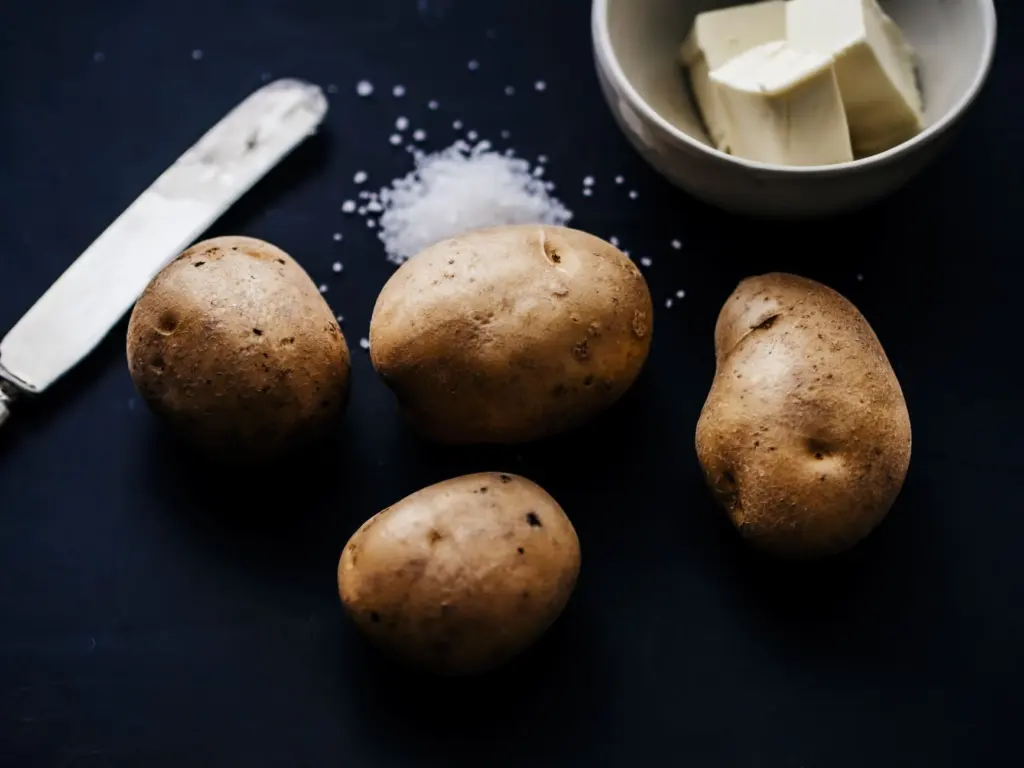
Choose russets for the fluffy center
Russets have a higher starch content and less moisture than waxier potatoes. That is the reason they bake into a light, floury interior rather than a dense, creamy one. If a recipe asks for restaurant-style results, buy russets and skip waxy types.
Dry the skin before anything else
Wet skins are the most common reason a baked potato comes out leathery. Wet potato skins will not crisp properly, so pat each potato dry and let it rest until any remaining moisture evaporates. Paper towels or a clean kitchen towel both work, as a recipe from The Tipsy Housewife notes, and drying comes before the oil and seasoning go on.
Pick a fat and salt method
Fat and coarse salt turn the dried skin into the crackling shell steakhouses are known for. Three approaches appear in tested home recipes, and they suit different cooks:
- Butter and coarse salt. Coat the potatoes in butter, then press and roll them in coarse kosher salt. This suits anyone who wants a rich, savory crust.
- Oil and generous salt. Rub each potato thoroughly with oil and sprinkle salt generously all over. This is the simplest route and works well for a batch of small potatoes.
- Wet salt crust. One steakhouse-style recipe washes each potato and, while it is still wet, rubs kosher salt liberally all over. Choose this only if you want a heavily salted, crusty exterior; if you oil or butter instead, dry the skins first.
Whichever you choose, the skins themselves become part of the dish. Russet skins can get wonderfully flavorful in the oven.
Oven temperature and time by potato size
There is no single correct setting. Hotter ovens finish whole large potatoes in under an hour, while a lower oven trades speed for very crisp skins on small potatoes.
| Potato | Oven temperature | Time | Where it bakes | Planning use |
|---|---|---|---|---|
| Large russets, salt-crusted | 425°F | 45–60 minutes, until tender inside and crisp outside | Directly on a foil-lined baking sheet | The quickest whole-potato bake; start testing at the early end of the range. |
| Small russets | 375°F | Until skins are very crisp | Directly on the oven rack, rack in the middle | Choose this when the oven is free for a long, slow bake and crisp skin is the priority. |
Figures come from the salt-crusted steakhouse recipe and the Sunset small-russet recipe.
Other recipes sit between those two. A steakhouse-style method bakes at 420°F for one hour on a center rack, and a horseradish-topped recipe bakes large potatoes for approximately 1 hour at 400°F. Notice that small potatoes at the lower setting take longer than large ones at the higher setting, so the oven temperature matters as much as size. Treat every time as a window and confirm with a doneness test rather than the timer alone.
The bake in stages
The sequence below combines the common points from the recipes above. Follow it in order, because drying has to come before coating.
- Set the oven rack. Place the potatoes on a center rack of the oven and preheat to your chosen temperature from the table.
- Dry thoroughly. Towel every potato until the skin feels dry, then let it rest briefly.
- Coat with fat. Rub with oil or butter, covering the whole surface.
- Salt generously. Press the potato into coarse kosher salt or sprinkle it over every side.
- Bake unwrapped. Set each potato directly on the rack, or on a foil-lined sheet if you prefer an easier cleanup.
- Test and serve. Check the thickest part for tenderness and take the potatoes out when a knife meets no resistance.
Foil or no foil
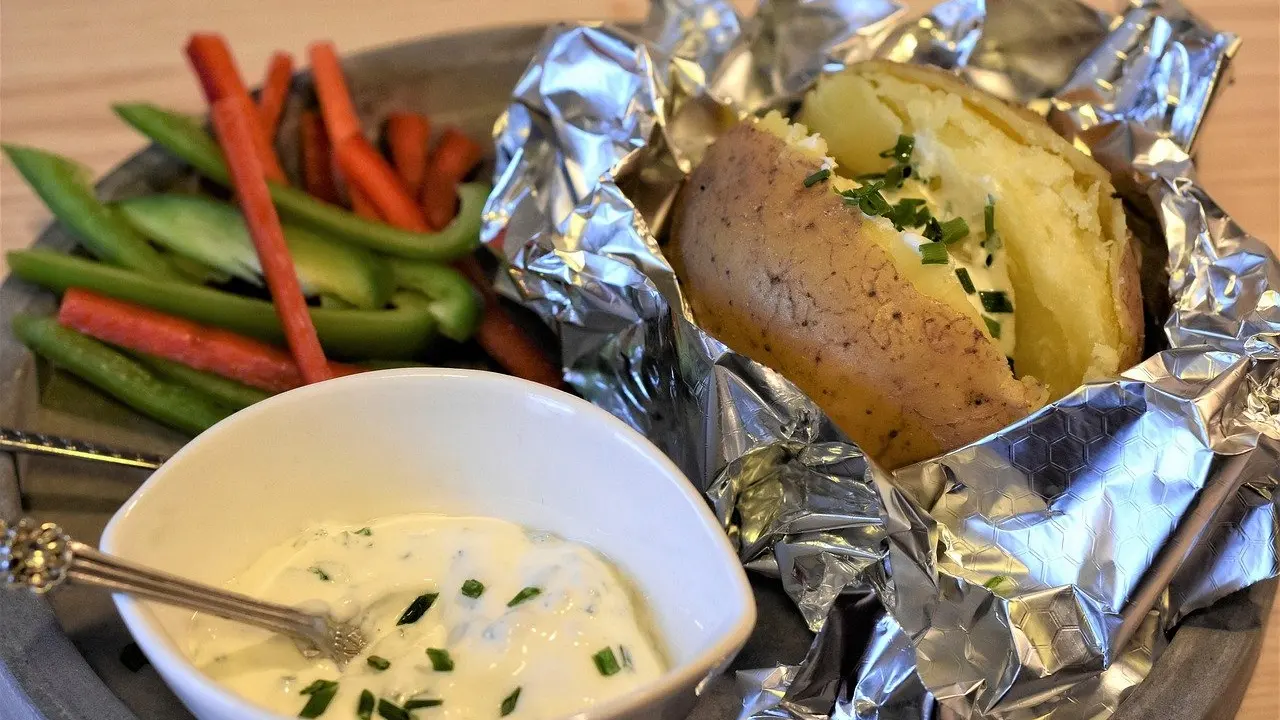
No, do not wrap the potatoes in foil. One recipe says plainly, do not wrap in foil, and the Sunset method bakes the potatoes directly on the oven rack until the skins are very crisp. Since crisp skin is the whole point of this style, leave the potato bare.
Foil still has a place beneath the potatoes. The salt-crusted method sets them directly on a foil-lined baking sheet, which keeps the potato itself uncovered. Use that if you do not want potatoes sitting on the rack.
How to tell a baked potato is done
Doneness is judged by resistance, not by a clock. Slide a fork or thin knife into the thickest part of the potato; it is done when the tool slides in easily. A sharp paring knife works the same way: if there is no resistance when you pierce the potato, it is done.
Check the skin too. The salt-crusted recipe wants both a tender inside and a crisp skin, so a potato that tests soft but still looks pale and soft-skinned deserves a few more minutes. If the knife meets resistance at the center, return it to the oven and test again rather than guessing.
Toppings for steakhouse-style potatoes
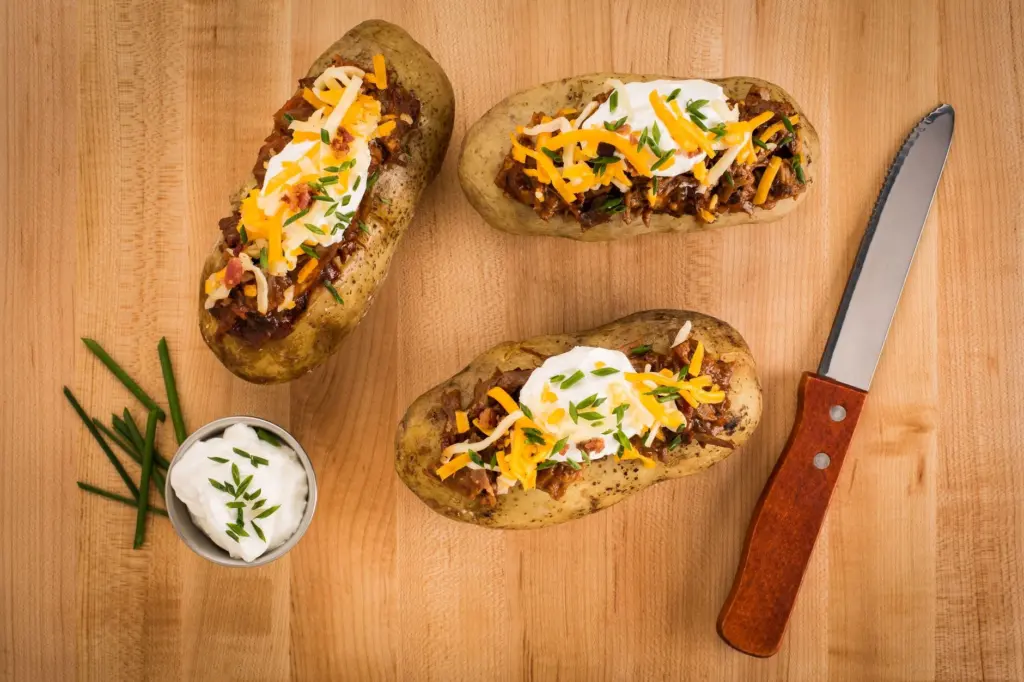
Keep toppings generous and simple, because the fluffy interior is the base for them. The classic steakhouse set is bacon bits, green onion and sour cream. For a loaded version, shredded cheddar, sour cream, bacon and green onions or chives are the usual choices.
- Butter and sour cream. The Sunset recipe nestles 1 tbsp butter into each potato, then tops it with 2 tbsp sour cream. It suits anyone who wants the plain steakhouse effect.
- Garlic cheese butter. Use it right away, scooped liberally on a hot baked potato, so it melts into the crumb.
- Bacon, cheddar and chives. This is the choice for a heartier, loaded plate.
If you are building a whole restaurant-style dinner around the potato, How To Make Hibachi At Home: Restaurant-Style Japanese Grilling Made Easy (2026) – Bionicbites covers a main course, and Restaurant-Style Refried Beans: How To Make Silky, Flavor-Packed Beans Like Your Favorite Mexican Restaurant – Bionicbites offers a savory side to serve alongside.
Baking ahead the way steakhouses do
A restaurant kitchen does not bake each potato from raw to order. At one San Francisco steakhouse, these potatoes are baked early in the day, held warm and crisped to order. That approach suits a dinner party: bake in advance, then finish the skins shortly before serving so they are crisp when they reach the table. Serve hot, because toppings melt best into a potato that is still steaming.
Frequently asked questions
How long do halved russets take?
Halved medium russets bake in about 25 to 35 minutes, far less than a whole potato. They are a good shortcut on a weeknight, though a whole potato gives more of the classic fluffy interior.
How much kosher salt does a salt crust need?
The salt-crusted steakhouse recipe uses 3 tablespoons of kosher salt for 6 large russet potatoes, rubbed on while the potatoes are wet.
What does skewering a potato do?
Inserting a stainless rod lengthwise promotes faster, even cooking and prevents potato explosions. It is optional, but useful with large potatoes.
Are the skins worth eating?
Yes. Once dried, oiled and salted, russet skins turn crisp and savory in the oven, and they are a large part of what makes the restaurant version distinctive.