| Decision | What the supplied method gives | Planning use |
|---|---|---|
| One-pot syrup and pearls | Boil about 10 minutes, stirring occasionally, until the syrup thickens. The recipe card lists prep 5 minutes, cook 20 minutes, total 25 minutes, for 2 servings. | Plan on roughly 25 minutes from start to glass, with the pearls cooked to package directions. |
| Rest after cooking quick-cook pearls | 2 minutes off heat for al dente pearls; up to 5 minutes for softer pearls. | Pick chewier or softer pearls with the rest time before you start the syrup. |
| Rich syrup ratio | 2 cups light brown sugar to 1 cup water, a 2:1 ratio of sugar to water. | Use it as the starting point when you want a dark, concentrated syrup for drizzling. |
| Pearls per glass | 1/4 cup sweetened boba spooned into the bottom of each glass. | Use it to scale the batch to the number of glasses you are serving. |
Timings and ratios come from the one-pot method at Cookerru and the quick-cook pearl method at Feast + West.
Here is how to make brown sugar boba: cook store-bought tapioca pearls, simmer them in brown sugar syrup until it thickens and coats them, then spoon them into milk. Pearl texture depends mostly on cooking and resting time.
If you are newer to the kitchen, our home cooking basics for beginners sit alongside this recipe and cover the general habits that make drinks and desserts like this easier to repeat.
Choosing a pearl method
The biggest decision is where your pearls come from, because it sets the whole schedule. Published recipes fall into three camps, and only one of them fits a quick weeknight drink.
- Store-bought pearls cooked in one pot. Cookerru’s method uses store-bought tapioca pearls, prepared per the package, then cooked down in a tea-infused brown sugar syrup. This is the best match for a fast, cafe-style result, and the only approach where the syrup and the pearls finish together.
- Quick-cook pearls boiled first, then tossed in syrup. Textual Chef starts with 1/2 cup of uncooked pearls and finishes them in a small amount of syrup made from 4 tbsp brown sugar and 4 tbsp water. It suits a smaller batch, and it gives you separate control over the pearls and the syrup.
- Pearls made from scratch. Tiffy Cooks builds a dough from 160 g tapioca starch, 60 g brown sugar and 80 ml water. Ingat Ylam uses a smaller handmade batch of 45 g (6 tbsp) tapioca starch, plus extra for dusting, with 25 g brown sugar and 30 ml water. Both are worth the effort only if you want to shape the pearls yourself.
For the quick method in this guide, buy ready-to-cook pearls. The from-scratch recipes involve shaping, long simmering and resting, which takes you well past a 20-minute drink.
Ingredients and quantities
A basic batch from Cookerru uses 1 cup tapioca pearls, 1 cup brown sugar, 2/3 cup strongly brewed black tea and milk to serve. The recipe card yields 2 servings, so the quantities already make a pair of glasses.
The tea is brewed first: pour 2/3 cup hot water over 2 black tea bags and steep about 5 minutes. Brewing it strong matters because the tea becomes the liquid the sugar boils down in, so a weak brew would leave the syrup tasting of sugar alone.
The pearls need far more water than the syrup does. Feast + West cooks 1 cup of uncooked black tapioca pearls in 8 to 10 cups of water, which gives them room to float and move. Use a large pot for this step and a smaller pot or saucepan for the syrup if you boil the pearls separately.
Sugar, tea and milk choices
Each ingredient choice changes the drink in a visible or tasteable way, so decide before you start rather than adjusting at the end.
- Brown sugar versus dark muscovado. Cookerru notes that dark muscovado sugar is a wonderful substitute if you have it, and that it gives a bolder flavor. Choose it when you like a more pronounced molasses-style sweetness.
- Tea or water. Brewed black tea gives the syrup a tea backbone; plain water makes it a pure sugar syrup, covered in the FAQ below.
- Milk type. Cookerru finds that 2% milk or oat milk gives the creamiest result, and that dairy or non-dairy milks both work. Pick oat milk if you want the drink dairy-free without losing body.
If you want to build a classic milk tea around the pearls instead of this syrup-forward drink, our guide How To Make Boba Tea At Home: A Simple 2026 Guide To Perfect Pearls And Milk Tea – Bionicbites covers that version.
Cooking the pearls and syrup
The sequence is short, but the order matters: tea first so it is ready, pearls next so they can rest, and syrup last so the pearls go straight into it.
- Steep the tea. Combine 2/3 cup hot water with 2 black tea bags and let them steep for about 5 minutes.
- Cook the pearls. Follow the package for store-bought pearls. For quick-cook pearls, Feast + West uses 8 to 10 cups of water per 1 cup of uncooked pearls. Once the pearls float, cover the pot and cook over medium heat for 3 to 5 minutes.
- Rest them off the heat. Leave the pearls to keep cooking for 2 minutes for al dente boba, or up to 5 minutes for softer pearls.
- Simmer in the syrup. In the one-pot method, combine the brown sugar, the tea and the pearls and boil for about 10 minutes, stirring occasionally, until the syrup is thickened.
If you boil the pearls separately and they are already tender, you do not need the full simmer. Textual Chef cooks packaged quick-cook pearls for 5 to 8 minutes in ample water, rests them 5 minutes off heat, then toss them for 2 to 3 minutes in a little syrup until it thickens and coats them. That shorter finish works because the syrup only has to coat the pearls, not cook them.
Timing for pearls made from scratch
Handmade pearls follow a different clock. Tiffy Cooks simmers them 25 minutes on medium, then covers the pot, turns off the heat and rests them 15 minutes. Ingat Ylam cooks them in boiling water until they float, lowers the heat and keeps cooking for 15 minutes, then covers the pot for 10 to 15 minutes. Quick-cook timings do not carry over to these.
Syrup texture and caramelization
Syrup thickness is the main lever on how the drink looks and tastes, and it comes down to how much sugar sits against the water. The recipes use quite different proportions.
Feast + West makes a rich syrup from 2 cups light brown sugar to 1 cup water, a 2:1 ratio. Ingat Ylam uses 50 g brown sugar (1/4 cup) to 40 g water, and Textual Chef uses equal 4 tbsp amounts of sugar and water. Treat the 2:1 ratio as the richer end of the range and the closer-to-equal ratios as lighter syrups that coat pearls without dominating the milk.
Thickening happens as you boil. Cookerru boils the syrup about 10 minutes with the pearls in it, stirring occasionally, until it is thickened, and Textual Chef stops when the syrup thickens and coats the pearls. Watch for that coating rather than the clock alone, since pot size and heat change how fast the water leaves.
Caramelization is a matter of timing. For a pattern-ready syrup, Tiffy Cooks warms the brown sugar until just before it becomes caramelized. Going past that point is a risk, so stay at the stove and pull the pan when the sugar looks close.
Tiger stripes and serving
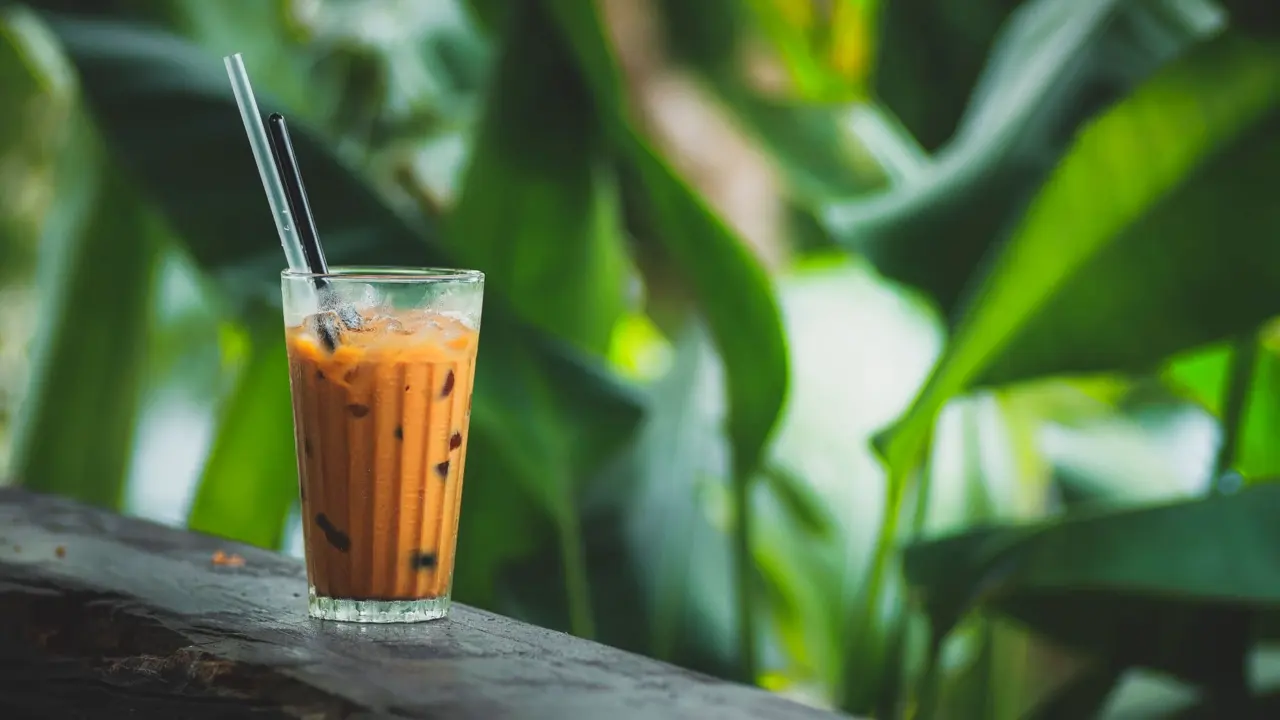
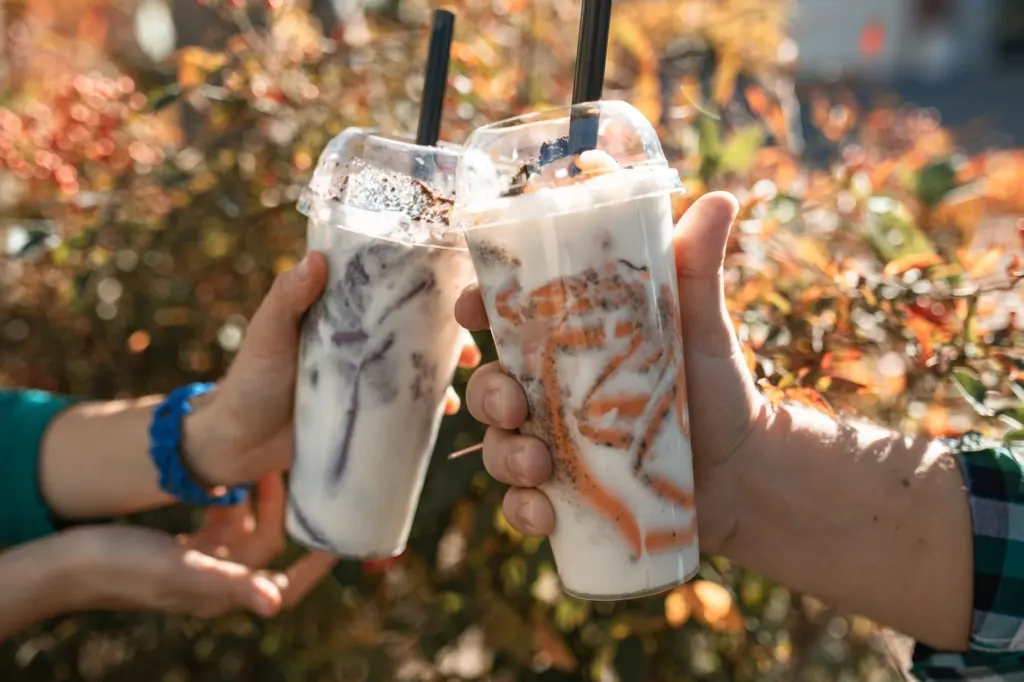
Tiger stripes come from the syrup, not from the pearls or the milk. According to Cookerru, the stripes form when brown sugar syrup is drizzled into the glass and dissolves into the milk. A thicker, warmer syrup gives you a more defined drizzle line against the glass wall, which is why the richer ratio above suits drinks you want to look striped.
Build each glass in layers. Spoon 1/4 cup of sweetened boba into the bottom of the glass, as Feast + West does, and use the syrup for the drizzle. Add the milk last so the syrup streaks settle into it.
Serve the drink promptly. The pearls are at their best soon after cooking, and the next section explains why.
Fixing hard or gummy pearls
Hard pearls usually trace back to the rest and the pearl type. Work through these causes in order.
- The rest was cut short. Feast + West lets pearls continue to cook for 2 minutes for al dente boba and up to 5 minutes for softer ones. If your pearls bite back, extend the rest toward the longer end instead of boiling them harder.
- The timing does not match the pearl type. Quick-cook pearls typically boil 5 to 8 minutes and rest 5 minutes off heat, per Textual Chef. Handmade pearls are simmered for 25 minutes and rested 15 minutes in Tiffy Cooks’ recipe, so a quick-cook schedule would leave them firm. Check the package, and taste a pearl before you move on to the syrup.
- The pearls waited too long. At the other extreme, Feast + West warns that boba is best used immediately or within a few hours of cooking, because it quickly becomes gummy. Cook the pearls last in your prep, and make the milk and glasses ready first.
When you have a choice between slightly firm and slightly soft, lean firm, because pearls continue to soften in the warm syrup and as they sit in the milk.
Storing and making ahead
Split the work by what keeps and what does not. The syrup is the part to make ahead: Feast + West says simple syrup lasts up to 1 month in the fridge, so a batch can cover several drinks.
Pearls are the opposite, as they turn gummy as they sit, so cook only what you will serve. If you make pearls from scratch, Tiffy Cooks suggests freezing the shaped tapioca balls for up to 1 month and cooking them when you want a drink. That is the one make-ahead route that protects pearl texture.
Frequently asked questions
Where does brown sugar boba come from?
It is a Taiwanese drink, also called brown sugar bubble tea or brown sugar milk tea, according to Cookerru. Boba tea in general dates back to the 1980s in Taiwan, per Feast + West.
Can I make brown sugar boba without caffeine?
Yes. Cookerru says to use water instead of tea to boil down the syrup for a non-caffeinated version, and the rest of the method stays the same.
Does regular brown sugar work instead of Taiwanese brown sugar?
Yes, but the boba will turn out slightly lighter in color, according to Tiffy Cooks.