Restaurant-style ranch blends cream, herbs, and acid to create a bright, savory dressing. The recipe below recreates that flavor with simple pantry items. It uses common dairy, dried herbs, and a quick technique. The instructions keep texture smooth and seasoning bold. Readers will learn ingredient roles, step-by-step mixing, and storage tips to make restaurant-style ranch at home.
Key Takeaways
- Restaurant-style ranch stands out for its fresh, tangy flavor achieved by using real buttermilk, higher-fat mayonnaise, and fresh herbs instead of commercial stabilizers and sweeteners.
- The base ingredients—mayonnaise, buttermilk, and sour cream—each play a vital role in creating a creamy, smooth texture and balanced tanginess in the dressing.
- Dried herbs like parsley, dill, and chives, combined with garlic and onion powders, ensure consistent, bold seasoning that mimics restaurant quality.
- Adding lemon juice or vinegar brightens the flavor, making restaurant-style ranch vibrant and perfect for pairing with fried chicken, greens, or roasted vegetables.
- Store the dressing in an airtight container in the refrigerator for up to 7 days, and always whisk or shake before use to maintain smooth texture and flavor.
- To scale the recipe accurately, maintain herb and acid ratios, adjusting quantities proportionally for small or large batches while tasting for balance.
What Makes Restaurant Ranch Different From Store-Bought
Restaurant-style ranch tastes fresh and lively. Commercial dressings often contain stabilizers and sweeteners. The restaurant-style ranch uses real buttermilk or cultured dairy for tang. It uses higher-fat mayonnaise for body and fresh herbs for aroma. Restaurants often add garlic and onion powders in measured amounts to keep flavor consistent. They finish with a touch of lemon or vinegar to lift the dressing. The result reads as creamy, tangy, and bright compared with many jarred options.
Ingredients, Pantry Staples, And Smart Substitutions
The base for restaurant-style ranch uses mayonnaise and buttermilk. Mayonnaise adds fat and emulsion. Buttermilk adds tang and thinness. Sour cream can thicken if the mix needs body. Dried parsley, dill, and chives supply classic herb notes. Garlic powder and onion powder add depth without texture. Salt and black pepper balance flavor. Lemon juice or white vinegar adjusts acidity. For a lighter ranch, replace half the mayo with Greek yogurt. For dairy-free needs, use a cultured plant-based yogurt and a neutral oil-based mayo.
Dairy, Herbs, And Acid: How Each Ingredient Shapes Flavor
Mayonnaise creates a silky mouthfeel in restaurant-style ranch. Buttermilk adds tang and slight acidity. Sour cream adds richness and slows separation. Fresh herbs give green, bright aromatics. Dried herbs give consistency across batches. Garlic powder gives a clean savory note. Onion powder adds umami without chunks. Lemon juice or vinegar sharpens the overall profile. Salt increases herb and dairy perception. Black pepper adds low heat and contrast. Each ingredient plays a clear role in the final balance.
Step-By-Step Recipe: From Mixing To Tasting
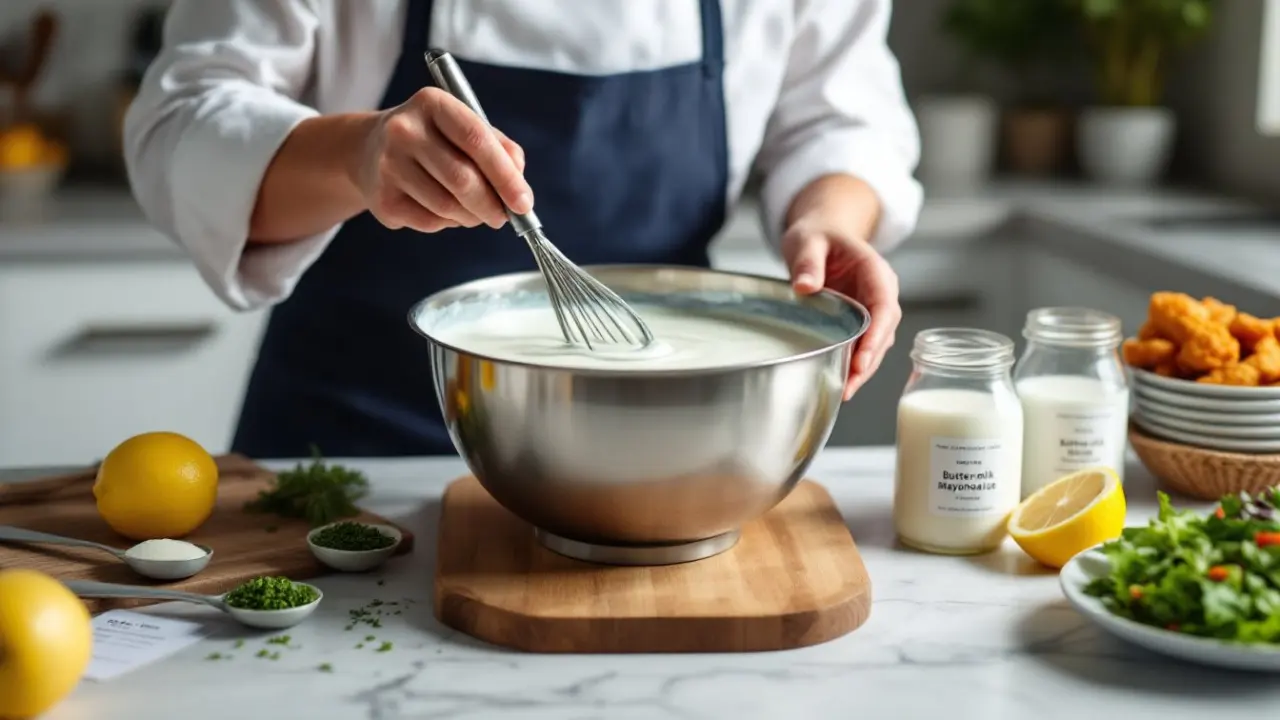
Combine 1 cup mayonnaise, 1 cup buttermilk, and 1/2 cup sour cream in a bowl for restaurant-style ranch. Add 1 teaspoon dried parsley, 1 teaspoon dried dill, and 1 teaspoon dried chives. Add 1/2 teaspoon garlic powder, 1/2 teaspoon onion powder, and 1 teaspoon salt. Whisk until smooth. Rest the dressing for 30 minutes in the refrigerator to let flavors meld. Taste the restaurant-style ranch and add up to 1 tablespoon lemon juice or vinegar if it needs more brightness.
Serving Ideas, Storage Guidelines, And How To Scale The Recipe
Serve restaurant-style ranch with greens, fried chicken, roasted vegetables, or as a dip for fries and wings. The dressing pairs well with crisp textures and smoky flavors. Store the dressing in an airtight container in the refrigerator for up to 7 days. Stir or shake before serving. Freeze is not recommended for best texture. To scale the restaurant-style ranch, keep the herb and acid ratios constant: 1 teaspoon dried herbs and 1 teaspoon salt per 2 cups of base. For small batches, halve the ingredients. For parties, multiply the base and taste as volume increases.