What is a matcha latte and why do people choose it over other drinks? The question appears in cafes and search bars. This guide explains the drink, its basic taste, and easy steps to make it at home. It also covers health points and how to spot good matcha. The text stays direct and clear for quick reading.
Key Takeaways
- A matcha latte combines finely powdered green tea with hot water and steamed milk for a creamy, smooth beverage.
- Choosing bright green, finely ground matcha powder ensures higher quality and a sweeter, less bitter flavor in your latte.
- Matcha lattes offer a unique taste that is grassy and slightly bitter, with a creamier texture than brewed green tea due to the whole tea leaf powder.
- The caffeine in a matcha latte provides a steady focus enhanced by L-theanine, promoting calm energy without the jitters common in coffee.
- To preserve matcha quality, store it in an airtight container away from light and moisture, and select ceremonial or culinary grades based on your preference and budget.
- Matcha lattes can be customized by adjusting matcha-to-milk ratios, milk types, and sweetness to suit different tastes and dietary needs.
What Makes A Matcha Latte: Ingredients, Grind, And Basic Preparation
A matcha latte mixes powdered green tea with hot water and milk. The main ingredient is matcha powder. Matcha comes from shade-grown tea leaves that workers stone-grind into a fine powder. Buyers should look for bright green powder and a fine, silky texture.
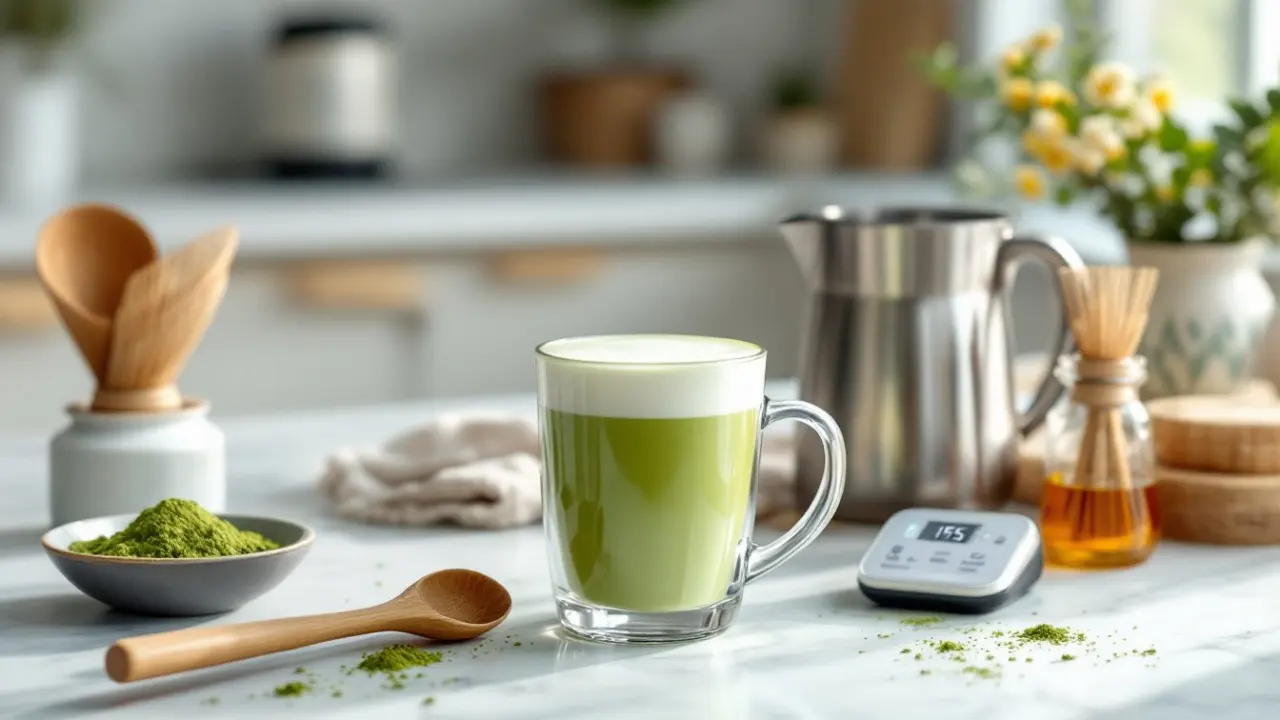
For a basic home recipe, measure one teaspoon of matcha powder. Add two tablespoons of hot water at about 175°F. Whisk the powder and water until the mixture looks frothy. Then add 6 to 8 ounces of steamed milk or a milk alternative. Sweeten to taste with honey, sugar, or simple syrup.
People use different mills and grinds. Ceremonial matcha uses very fine grind and a sweeter green color. Culinary matcha uses a slightly coarser grind and a stronger flavor. Ceremonial matcha fits plain lattes and traditional tea. Culinary matcha fits blended drinks and recipes that need more flavor.
Equipment stays simple. A small whisk or a bamboo chasen makes froth. A small electric frother also works. A fine-mesh sifter helps remove lumps before whisking. A good temperature keeps matcha bright. Hot water that is too hot makes the drink bitter. Cold milk yields an iced matcha latte when mixed the same way.
People vary the ratio of matcha to milk. One teaspoon per cup gives a mild drink. Two teaspoons per cup gives a stronger drink and more caffeine. The recipe stays flexible to taste and time of day.
How A Matcha Latte Tastes, Texture Differences, And How It Compares To Green Tea Or Espresso Lattes
A matcha latte tastes grassy, sweet, and slightly bitter. The flavor depends on matcha quality and water temperature. High-quality matcha tastes more sweet and vegetal. Lower-quality matcha tastes more bitter and astringent.
A matcha latte has a creamier mouthfeel than brewed green tea. The drink mixes whole tea leaf powder into milk. That action creates a fuller texture than steeped tea leaves. When someone sips matcha, they taste the tea leaf itself. When someone sips brewed green tea, they taste an infusion of the leaf only.
Compared to an espresso latte, a matcha latte feels softer. Espresso gives a concentrated, bitter coffee note and a strong crema. Matcha gives a smooth, vegetal profile and a thin foam. An espresso latte feels heavier in the chest for some people. A matcha latte feels lighter yet filling because of the milk.
Iced versions change the texture. Ice thins the drink and mutes some flavor. Cold milk and matcha mix well when someone shakes or froths the blend. Blended matcha drinks add more sweetness and a thicker, dessert-like texture.
Baristas alter texture with milk choice. Whole milk creates a richer mouthfeel. Oat milk and almond milk change body and sweetness. Oat milk often enhances the creamy texture and pairs well with matcha. Almond milk can add a nutty counterpoint that some people like.
People who prefer green tea often like matcha for depth. People who prefer espresso often like matcha for calm focus without coffee bitterness. The two drinks offer different energy profiles and flavor experiences.
Health Benefits, Caffeine Content, And How To Choose High-Quality Matcha
A matcha latte provides antioxidants, vitamins, and moderate caffeine. Matcha contains concentrated catechins, which act as antioxidants. Researchers link catechins to cell protection and general health support. Matcha also provides vitamin C, vitamin A precursors, and small amounts of minerals.
A typical one-teaspoon serving contains about 60 to 70 mg of caffeine. The exact amount varies by powder and scoop size. This caffeine amount falls between brewed green tea and a small espresso. People report steadier focus after matcha because the drink also contains L-theanine. L-theanine promotes calm and can balance the stimulant effect of caffeine.
People should watch added sugar. Sweet syrups raise calories quickly. A plain matcha latte keeps sugar low and preserves the tea nutrients. Milk choice also changes calories. Whole milk adds more calories than low-fat or plant milk.
To choose high-quality matcha, look for color and texture. High-quality matcha shows a vivid green color and a fine, silky feel. Lower-quality powders show a dull green or yellow tint. Buyers should read labels for origin and leaf grade. Japanese prefectures such as Uji and Shizuoka often produce high-grade matcha.
Storage matters. Store matcha in an airtight container away from light, heat, and moisture. Refrigeration helps preserve color and aroma. Use matcha within a few months for best taste.
People with certain conditions should consult a clinician. Matcha contains caffeine and small amounts of vitamin K. These elements can affect medication and sleep. Pregnant people should limit caffeine and follow medical advice.
When someone picks matcha, they balance taste, cost, and use. Ceremonial grade suits simple lattes and sipping plain matcha. Culinary grade suits recipes and larger, sweeter drinks. The choice gives control over flavor and budget.