| Variable | Supported value or effect | Planning use |
|---|---|---|
| Alginate in the juice | 1.2 g sodium alginate (about 0.5% by weight) in 1 cup (240 mL) fruit juice or flavored liquid | Weigh it and scale it with the amount of juice. |
| Calcium bath | 5 g food-grade calcium lactate in 2 cups (480 mL) water | Mix the bath while the juice mixture rests. |
| Rest after blending | 20–30 minutes, or until most bubbles disappear | Do not drop the mixture while it is still foamy. |
| Time in the bath | 30–60 seconds; 1 to 2 minutes is the stated maximum before the shell turns thick | Start short. A shorter time gives a thinner shell with more liquid inside. |
| Hands-on prep | 15–20 minutes | A small batch fits around a drink or dessert you are already making. |
| Storage | 2 to 3 days in flavoured syrup; best within a couple of days | Make small batches shortly before serving. |
Figures come from Fitlane Nutrition’s sodium alginate recipe and the popping boba guide at zhangcatherine.com.
How to make popping boba comes down to one reaction: calcium meets sodium alginate at the surface of a juice droplet and forms a thin gel shell. Use food-grade ingredients and keep bath time short, because shorter time leaves more liquid inside.
Popping boba belongs with the toppings and techniques gathered under current food trends. This guide deals with the home method: the choices that change the result, the chemistry, a working recipe, fixes and storage.
Decisions that change the pearls
Time in the bath, the amounts of alginate and calcium, the water and the method you follow decide whether you get a juice-filled burst or a firm gel bead. Settle these before you start dropping.
Time in the bath
Bath time is the easiest variable to adjust and the one that most changes the bite. Fitlane Nutrition leaves the droplets in the calcium bath for approximately 30–60 seconds and explains that a shorter time produces a thinner shell with more liquid inside. The zhangcatherine.com guide puts the ceiling at 1 to 2 minutes to avoid a thick shell. That ceiling is a limit, not a target. For a pearl that bursts with juice, start at the short end of the 30–60 second range and lift the spheres out early. Move toward the longer end only if you prefer a firmer shell.
Amounts and water
- Weigh the alginate. Fitlane’s batch pairs 1 cup (240 mL) of fruit juice or flavored liquid with 1.2 g of sodium alginate, about 0.5% by weight. An amount that small is easy to get wrong by eye, so measure it and scale it with the volume of juice instead of adjusting by feel.
- Keep the calcium in the bath. In the same recipe, food-grade calcium lactate is dissolved in water to make the bath. A librarian-led demonstration reported by Yahoo Lifestyle found that too much calcium makes the food and sodium alginate mixture too gelatinous. Do not add extra calcium hoping for a sturdier shell.
- Use low-calcium water. Fitlane notes that distilled or purified water can make results more consistent. Casa de Casey also specifies cold distilled water for its alginate bath. If batches vary for no obvious reason, tap water is the first thing to remove from the process.
Direct or reverse method
- Direct method. The alginate goes into the juice and the calcium goes into the bath. This is the version Fitlane uses. It has one bath to prepare and a short, clearly stated bath time, so it suits a first attempt.
- Reverse method. Casa de Casey describes popping boba as made through reverse spherification: a flavorful liquid is mixed with a flavorless calcium, then dropped into a sodium alginate bath. Its bath is 1.5 tsp sodium alginate in 32 ounces of cold, distilled water, blended for 5 minutes to fully hydrate. The bubbles then dissipate over 10 minutes to 1 hour, or overnight. The spheres set for 2 minutes, which is longer than the direct method’s 30–60 seconds. They are then rinsed in fresh water. It suits cooks who would rather prepare the bath ahead and work through the drops at a calmer pace.
How spherification forms the shell
Popping boba is a bubble tea topping with a thin gel shell that bursts with juice, as the zhangcatherine.com guide describes it. The shell comes from spherification, and sodium alginate does the gelling. Fitlane calls it a food-grade gelling ingredient commonly used in the technique, and the zhangcatherine.com guide notes that it comes from brown seaweed.
The mechanism is simple. When droplets enter the calcium bath, calcium ions connect the alginate molecules at the droplet surface, forming a flexible gel membrane. The inside of the drop stays liquid for as long as the membrane is thin. That is why the bath-time advice above matters so much: the longer the spheres stay in, the thicker the membrane becomes.
In the reverse method the roles swap, but the result is the same kind of shell. The calcium sits in the flavored liquid and the alginate sits in the bath. Kits and demonstrations sometimes add further ingredients. The librarian-led demonstration mentioned earlier involved calcium chloride, sodium alginate and sodium citrate. For that reason, follow the quantities printed on the kit you buy rather than swapping calcium sources gram for gram. The only calcium amount given in this guide is for calcium lactate.
Method for fruit popping boba at home
This sequence follows the direct method from Fitlane Nutrition, which lists a prep time of 15–20 minutes. Details on dropping and rinsing come from Casa de Casey and the zhangcatherine.com guide.
- Measure 1 cup (240 mL) of fruit juice or flavored liquid and 1.2 g of sodium alginate.
- Blend them for approximately 30–60 seconds.
- Rest the mixture for 20–30 minutes, or until most bubbles disappear. The zhangcatherine.com guide gives 15 to 30 minutes so the air bubbles rise out.
- Dissolve 5 g of food-grade calcium lactate in 2 cups (480 mL) of distilled or purified water to make the bath.
- Draw the juice mixture into a syringe or dropper. The syringe helps form consistent-sized spheres. Casa de Casey found a dropper easier to use than a spoon.
- Hold the tip just above the bath surface and release one drop at a time. Keep the spheres from touching, because spheres that make contact in the bowl form together.
- Leave the drops for approximately 30–60 seconds, then lift them out. Do not go past 2 minutes.
- Rinse the spheres in fresh water and serve or store them.
The mixture is only useful once the foam has cleared. Rushing the rest period leaves bubbles in the mixture, so use the waiting time to prepare the bath and your serving glasses.
Fixing common problems
- Spheres fuse. Drops that touch in the bath join together. Work in small batches and space the drops so each has its own area.
- Shell is thick. Shorten the bath time. The zhangcatherine.com guide treats 1 to 2 minutes as the maximum, and Fitlane’s shorter times give thinner shells.
- Mixture turns gelatinous. Too much calcium is the likely cause, according to the librarian-led demonstration. Check that you have not added calcium to a mixture that already carries alginate.
- No shell forms. The same demonstration said spherification needs a pH between 4 and 10. A very tart juice may fall outside that range, so choose a milder juice or test a few drops first.
- Results differ from batch to batch. Switch to distilled or purified water, then keep the bath time and amounts fixed while you adjust one thing at a time.
Ingredient safety at home
Making popping boba at home is a matter of using the right ingredients rather than any unusual equipment. Fitlane describes sodium alginate as a food-grade gelling ingredient and specifies food-grade calcium lactate for the bath. Buy both labeled for food use and keep the amounts to those in your recipe.
The technique itself is ordinary kitchen work with a scale, a blender, a syringe or dropper and two bowls. The ingredients come from brown seaweed in the case of sodium alginate, and calcium salts from the kit or recipe you follow. The librarian-led demonstration reported by Yahoo Lifestyle shows the method being run as a hands-on class activity. Whether a finished batch suits a particular eater still depends on the juice or flavored liquid you choose. Check that liquid for the same allergens or dietary issues you would check in any drink.
Storing and serving
Popping boba is best within a couple of days, according to the zhangcatherine.com guide. It recommends keeping the spheres in flavoured syrup for 2 to 3 days. Stored too long, the shells soften and can leak. Treat the 2 to 3 day figure as the outer limit and make only as much as you expect to serve. A batch left to the end of the window will not pop as crisply.
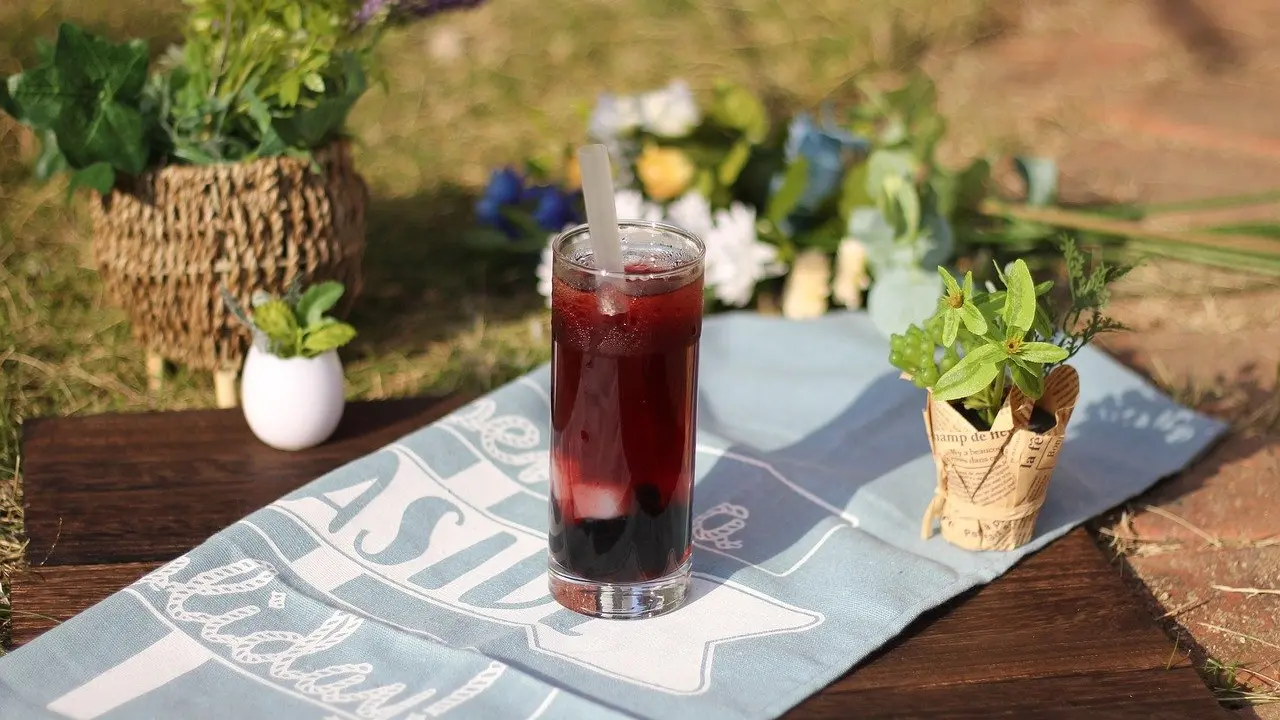
The most direct use is as a topping in boba tea, where the juice-filled pearls contrast with ordinary tapioca. OS Bubble’s recipe collection includes a fruit punch that calls for 2 cups of passion fruit popping boba added to a mix of juices. That shows how generous the topping can be in a larger drink. Add the spheres last, just before serving, so they spend as little time as possible in the liquid.
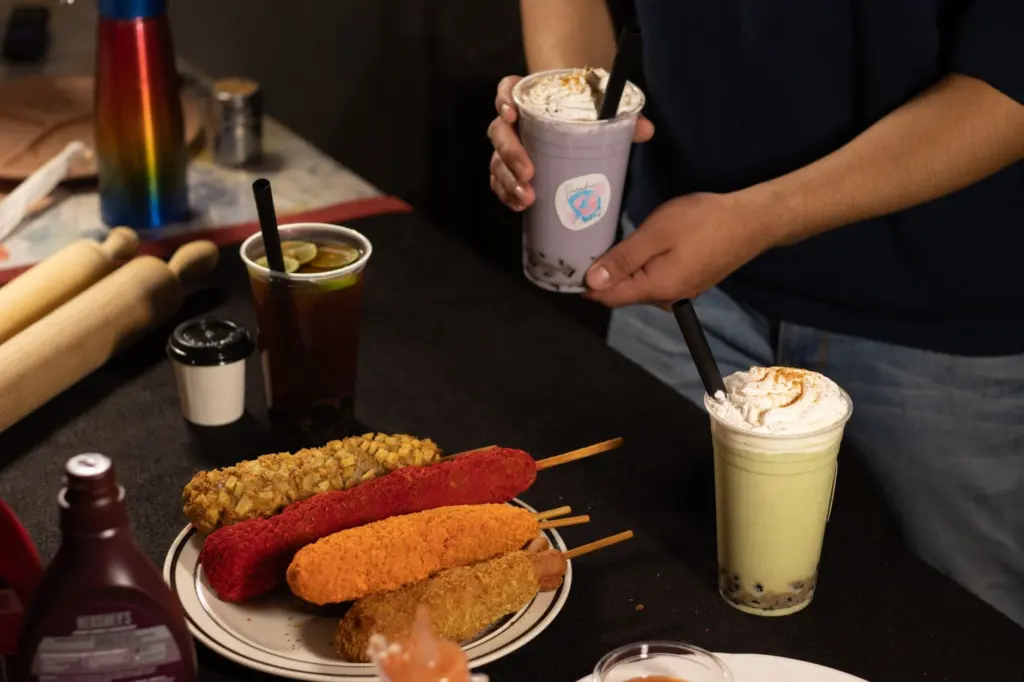
If you are planning a purple dessert alongside a fruit drink, the guide to What Is Ube Ice Cream? The Complete Guide To The Filipino Purple Treat – Bionicbites covers the frozen treat. The ingredient behind it is explained in What Is Ube? The Purple Filipino Yam: Uses, Flavor, And How To Cook It – Bionicbites.

Frequently asked questions
Is popping boba vegan?
The zhangcatherine.com guide says classic popping boba is vegan if the liquid is. Sodium alginate comes from brown seaweed, so the liquid you choose is what matters.
Can I use a spoon instead of a syringe?
Casa de Casey describes a spoon method but found the dropper easier to use. A syringe or dropper also helps form consistent-sized spheres.
Does the liquid have to be fruit juice?
No. Fitlane’s batch calls for fruit juice or flavored liquid, and Casa de Casey’s reverse method works from any flavorful liquid mixed with flavorless calcium.
Can I store the spheres in oil?
Casa de Casey stores finished spheres in a container of the same flavorful liquid or in neutral flavored oil. The zhangcatherine.com guide uses flavoured syrup instead.