Popular food in Greece centers on moussaka, souvlaki, gyro, horiatiki salad, feta, spanakopita and baklava. Start with shared small plates, move to grilled meat, seafood or a baked main, and finish with a phyllo or honey dessert.
Greek menus are easier to read once you know how a meal is built. Our guide on how to find authentic local food when traveling covers the wider habits that help in any country. The sections below move from why Greek food tastes the way it does to what to order, dish by dish.
Why Greek menus lean on olive oil, cheese and the grill
Greek cooking starts with its climate. Food Trippers’ guide to Greek food describes a climate that is dry and hot for much of the year, which gives Greece an abundance of local ingredients. The same guide notes that Greek farmers have been growing olives for thousands of years. Olive oil is therefore a base ingredient, not a finishing touch.
The practical result shows up in how dishes are cooked. Mia Kouppa’s guide to Greek foods says Greeks use olive oil to fry everything, including potatoes. Fried potatoes on a Greek plate are part of the standard recipe and not a generic side. Salads and cheese dishes lean on local produce in the same way, which is why a simple order often tastes better than a complicated one.
How a taverna meal unfolds
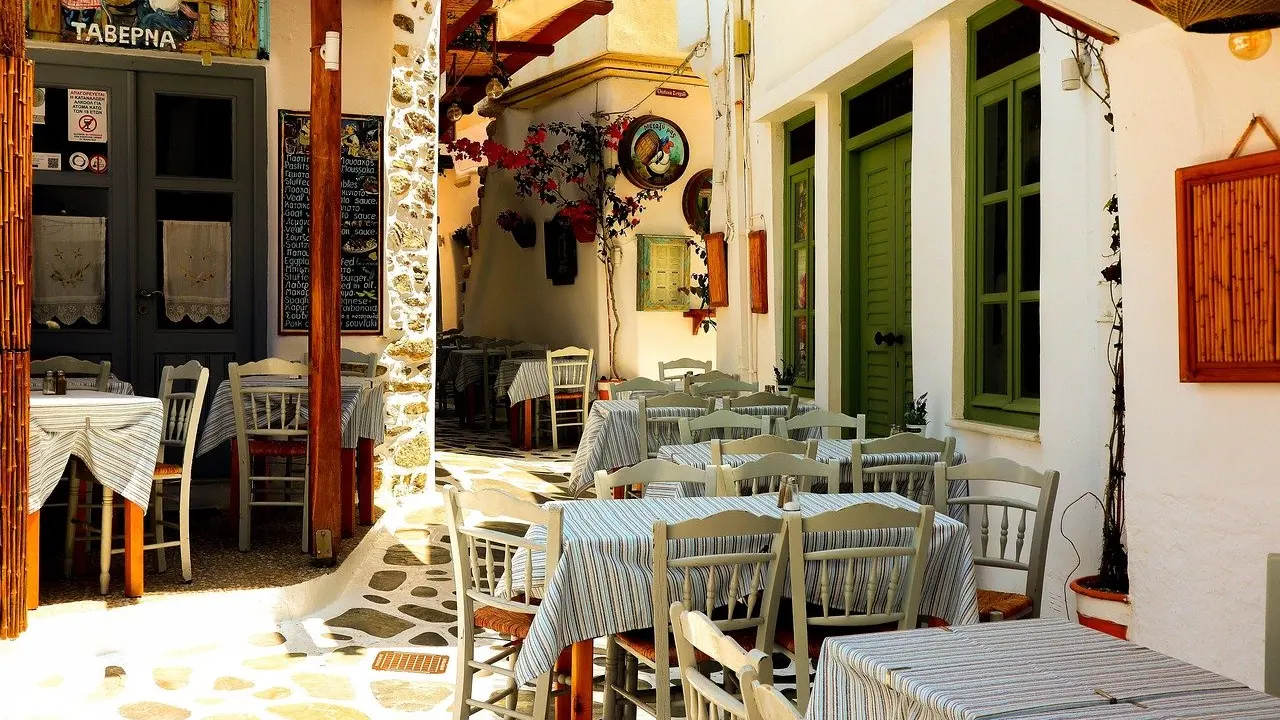
A taverna is a casual eatery, and the format rewards ordering in stages instead of choosing one big plate. The sequence below follows the way Food Trippers describes dining with friends in Greece, as a festive event that begins with a myriad of small plates.
- Small plates first. Sauces, dips and olives open the meal. Order several for the table and decide on mains afterward.
- A salad or a cheese dish. Horiatiki, the Greek village salad, turns up at restaurants, tavernas and Greek homes alike, according to Mia Kouppa. Fried saganaki cheese also works at this stage.
- One main. Moussaka and grilled souvlaki are the standard taverna choices. At a psarotaverna, a seafood restaurant, grilled octopus is usually on the menu.
- A sweet to finish. Baklava and loukoumades are the two best-documented options.
Greek dishes at a glance
| Dish | What to know | Planning use |
|---|---|---|
| Moussaka | Layers of eggplant, potatoes and ground meat under creamy bechamel; traditionally lamb | A main for a taverna; widely served around the world, so it suits a first Greek meal |
| Souvlaki | Grilled meat, typically on a skewer; pork, chicken or occasionally lamb | Order it with pita, fried potatoes and tzatziki for a full plate |
| Gyro | A name some menus also use for souvlaki, alongside kalamaki | Read the menu description before assuming what arrives |
| Horiatiki | Salad with no lettuce: tomato, cucumber, onion, feta and olives | A dependable starter found in restaurants, tavernas and homes |
| Feta | Sold straight from the barrel at local markets | Look for barrels at markets; in a taverna it arrives in the salad |
| Spanakopita | Often eaten for breakfast in Greece | Treat it as a morning option, not only a starter |
| Saganaki | Cheese melted to crispy in a small two-handled pan; graviera, halloumi or feta | Ask which cheese the kitchen uses |
| Grilled octopus | Usually grilled; on the menu at any psarotaverna | The natural pick at a seafood restaurant |
| Meze | Small plates of sauces, dips and olives that open a festive meal | Order several to share before choosing mains |
| Olive-oil fried potatoes | Olive oil is used to fry everything, potatoes included | Expect them beside grilled meat |
| Baklava | Typically baked with 33 layers of phyllo dough, nuts and cinnamon | A layered nut pastry for the end of the meal |
| Loukoumades | Round balls of golden fried dough flavored with cinnamon and honey syrup | Suits anyone who prefers fried dough and honey to layered pastry |
Dish descriptions in the table follow Food Trippers and Mia Kouppa.
Souvlaki and gyro: street food and taverna grills
Souvlaki
Souvlaki is a famous Greek food in which grilled meat is typically served on a skewer, as Food Trippers puts it. Grill masters cook pork, chicken and occasionally lamb on large pits. The same guide recommends eating souvlaki with pita bread, fried potatoes and tzatziki sauce. Chicken or pork is the safer default, since lamb is only an occasional choice.
Gyro
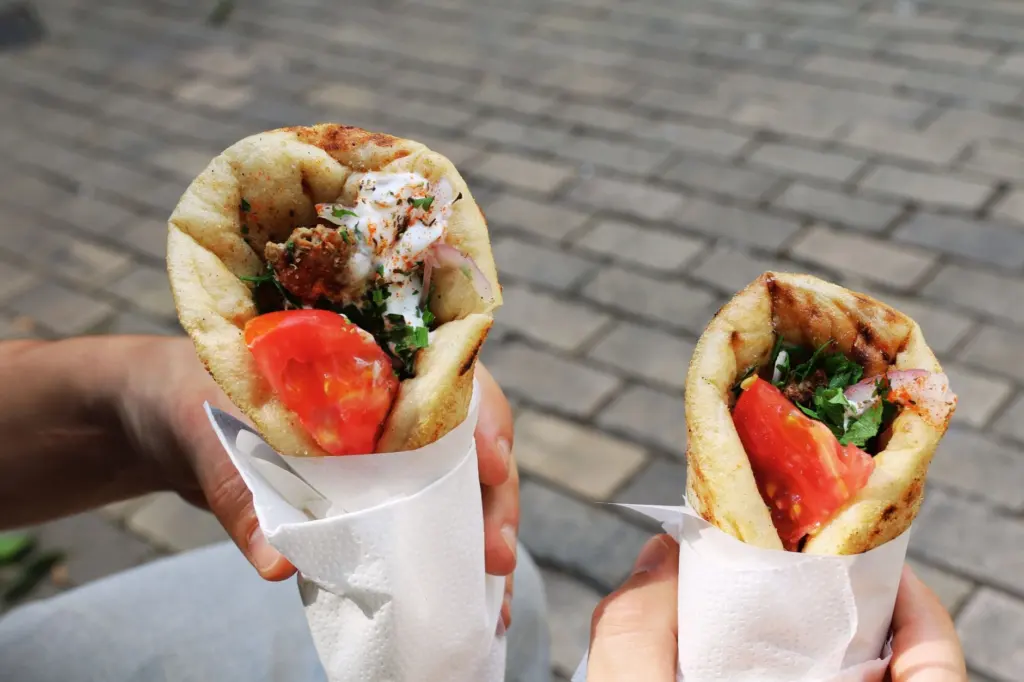
A gyro is a pita dish. Sports Illustrated’s Greece food roundup describes it as salty, creamy and filled with tzatziki, lamb, lettuce and spices. It is the more portable of the two and suits eating on the move.
Telling them apart on a menu
Souvlaki is grilled meat on a skewer, usually plated with pita, potatoes and tzatziki. A gyro is a filled pita. Labels are not always strict, though. Food Trippers notes that some Greek menus list souvlaki as kalamaki or gyro, and says it is all souvlaki and all good. Treat the menu name as a hint and read the description. If you want the wrapped, handheld version, ask what goes inside the pita. If you want a sit-down plate, look for skewers with potatoes.
Salads, cheese and seafood
Horiatiki and feta
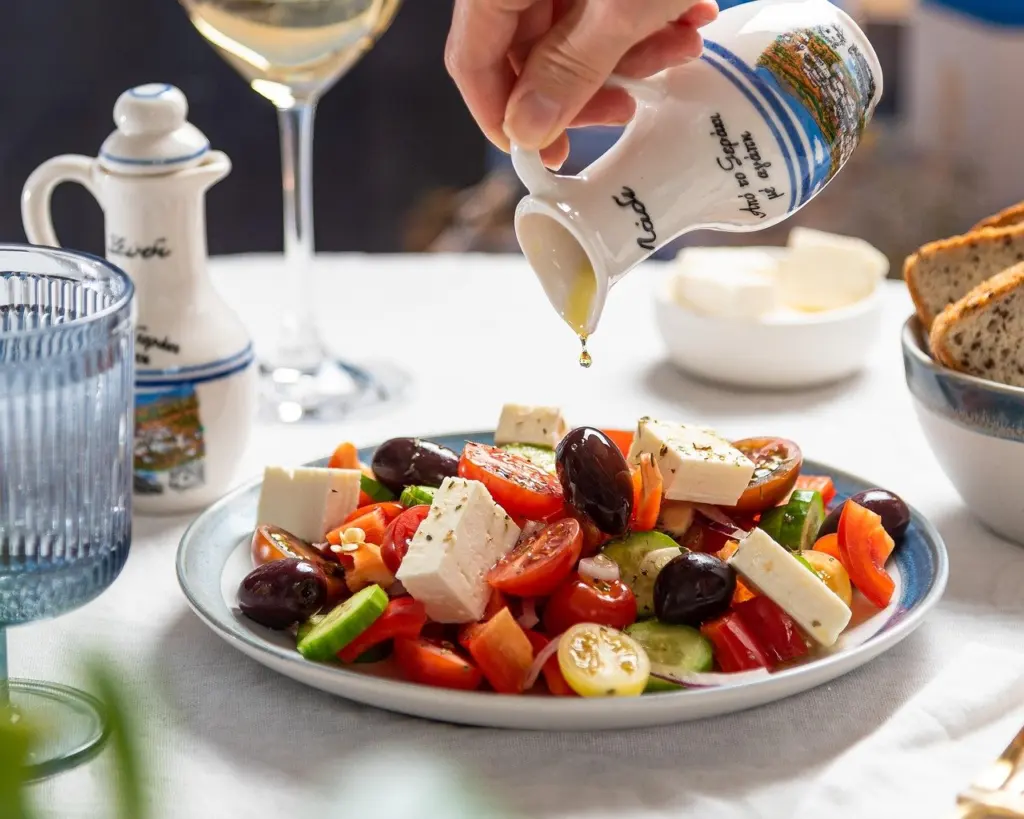
Horiatiki is the rustic Greek salad. Food Trippers points out that these salads have no lettuce. Instead they use local ingredients like tomato, cucumber, onion, feta cheese and olives. Mia Kouppa says you will find it in any restaurant, any taverna and any Greek home, which makes it the lowest-risk order on the table. Feta is the ingredient that matters most here, and Greek shoppers can buy it straight from the barrel at local markets. A market stall is the best place to taste it on its own.
Saganaki
Saganaki is named after a small two-handled frying pan, and the dish melts cheese until crispy. According to Food Trippers, the cheese varies by restaurant, with graviera, halloumi and feta all possible. Because the cheese changes the flavor, ask the server which one is used. It works best as a shared starter.
Grilled octopus
At a psarotaverna you will certainly see octopus on the menu, usually grilled, as Mia Kouppa notes. If you are at a seafood restaurant and want the dish most associated with the setting, this is the one to order.
Moussaka and spanakopita: baked dishes
Moussaka is layers of eggplant, potatoes and ground meat topped with a creamy bechamel sauce, according to Mia Kouppa. Food Trippers describes chefs layering sauteed eggplant with minced meat, traditionally lamb, to build a casserole. It adds that moussaka may be the most popular Greek dish served around the world. If you only eat one baked main, this is the safe and recognizable choice.
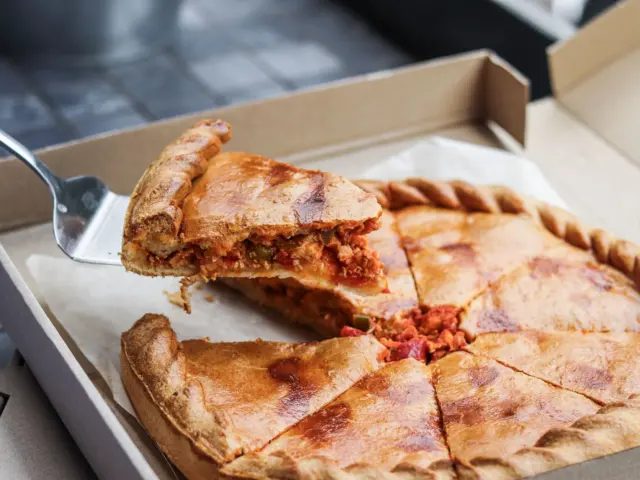
Spanakopita is a savory pie of flaky phyllo filled with heaps of spinach and melted feta, per Sports Illustrated. In Greece, people often have it for breakfast, so it works as a morning meal and not only as a starter. It also offers a first taste of the phyllo that returns in the best-known Greek dessert.
Greek desserts: baklava and loukoumades
The two most clearly documented Greek desserts are baklava and loukoumades, and they suit different tastes. Baklava is typically baked with 33 layers of phyllo dough, nuts and cinnamon, according to Food Trippers. It is a layered pastry for anyone who likes nuts and cinnamon.
Traditional loukoumades are round balls of golden fried dough flavored with cinnamon and honey syrup, in the same guide’s words. They suit people who prefer fried dough with honey. Cinnamon links the two desserts, so choose by texture: layered pastry or soft fried balls.
Planning other food-led trips
The same dish-first approach works in other destinations. For island plates, see Taste Hawaii: 12 Iconic Foods To Try On Your First Trip (And Where To Find Them) – Bionicbites. For a city-scale list of bites, see What To Eat In NYC: 25 Iconic Bites And Where To Find Them In 2026 – Bionicbites.
Frequently asked questions
What food is Greece known for?
Moussaka, souvlaki, gyro, horiatiki salad with feta, spanakopita and baklava are the best-known dishes. Moussaka is also widely served outside Greece.
What is the difference between gyro and souvlaki?
Souvlaki is grilled meat typically served on a skewer. A gyro is a pita dish filled with tzatziki, lamb, lettuce and spices. Some menus use the names interchangeably, so check the description.
What should I order at a taverna?
Order a few small plates and a horiatiki salad, then pick moussaka or souvlaki as the main. At a seafood taverna, choose grilled octopus.
What are popular Greek desserts?
Baklava, made with phyllo, nuts and cinnamon, and loukoumades, fried dough balls with cinnamon and honey syrup, are the two most popular options.