Arriving hungry in London, you might assume fish and chips is the whole story. Popular food in London also means pie and mash, a full English, Sunday roast and chicken tikka masala, each best eaten in the right kind of place.
This guide pairs each dish with where to find it, and it builds on the wider advice in how to find authentic local food when traveling.
What London is known for
London is best known for fish and chips, pie and mash, the full English breakfast and the Sunday roast, with chicken tikka masala and afternoon tea close behind. The common mistake is treating these as one blur of “British food”. Each dish has a recognisable plate, and knowing that plate tells you quickly whether a menu offers the classic or a loose imitation.
The table sets the usual assumptions against what each dish involves, so you can choose with a clear picture before you queue.
| Dish | Common assumption | What it actually is | Planning use |
|---|---|---|---|
| Fish and chips | Any fried fish with a side of potatoes | Golden, crispy batter around flaky white fish, with chunky chips doused in salt and vinegar | Judge a shop by the crunch of the batter and the flakiness of the fish |
| Pie and mash | Just a meat pie | A minced meat pie with mashed potato and a parsley sauce known as liquor, sometimes with jellied eels | Expect a parsley sauce on the plate rather than ordinary gravy |
| Full English breakfast | Eggs and bacon | Bacon, eggs, sausages, baked beans, grilled tomatoes, mushrooms, toast and black pudding | Treat it as the main meal of the morning |
| Sunday roast | Meat and potatoes | Meat, roast potatoes, vegetables, Yorkshire pudding and lots of gravy | Pick a pub for a weekend lunch or dinner |
| Chicken tikka masala | An import from India | A creamy, spiced dish described as created in Britain | Count a curry-house dinner as local eating |
The descriptions follow Sunny in London’s food guide and Golden Tours’ guide to quintessential British food.
Every dish here is a set of components. A menu that drops the defining part, such as the parsley sauce or the Yorkshire pudding, is serving a variation rather than the classic. A variation can still be good; just know which one you are ordering.
Fish and chips: the shop matters more than the fish
Fish and chips is the dish most visitors expect, and the plate is simple: battered white fish and chunky chips, finished with salt and vinegar. The pleasure comes from contrast, with a crisp shell around fish that stays flaky inside. Because there is so little to the dish, the quality of the shop decides the meal.
Britain once had far more places to eat it. Eating Europe notes that during the 1920s there were an estimated 35,000 fish and chip shops in the country, against around 10,500 later. With that many fewer shops, it pays to choose a place on purpose rather than settle for the nearest takeaway.
Where to find the best fish and chips
“Best” is a matter of opinion, so treat any ranking as a starting point. Sunny in London describes Poppies Fish & Chips as widely accepted as the best place in London for the dish. That makes it a sensible pick if you want a reputation-led meal and are willing to follow a recommendation.
The Golden Hind on Marylebone Lane suits a different traveller. Eating Europe says the premises are tucked away there, and that many fish and chips lovers walk through its doors daily. If your day already takes you through Marylebone, it is a convenient, long-established stop.
Whichever you choose, order it the traditional way and eat it hot, because the batter loses its crunch as it cools.
Pie and mash and the full English
These two dishes share a background: both are filling, affordable-style meals built for a long day, and both reward a visitor who orders the full plate rather than a single component.
Pie and mash
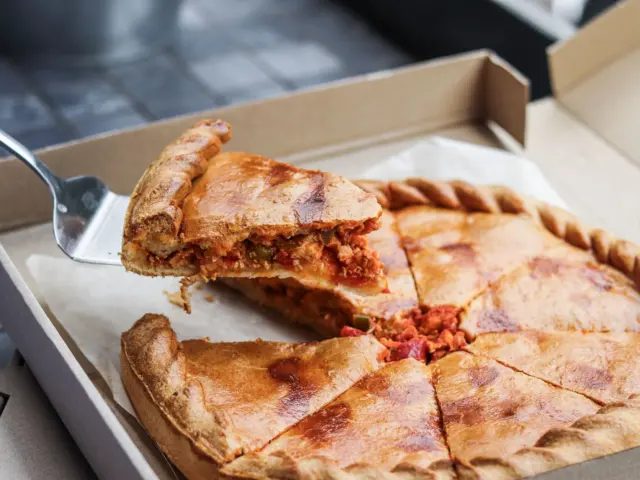
Pie and mash is a traditional working-class food that originated in the Docks of London, according to Golden Tours. The plate is a minced meat pie, mashed potato and a parsley sauce known as liquor. The word trips up newcomers: here it names the sauce poured over the plate, not something to drink.
Jellied eels sometimes appear alongside. Treat them as an optional extra rather than a requirement, and judge the shop first on the pie, the mash and the sauce.
Full English breakfast
A proper fry-up includes bacon, eggs, sausages, baked beans, grilled tomatoes, mushrooms, toast and black pudding, as the Sunny in London guide lists it. A blogger at Beyond Yellow Brick observes that the staples you always get are two fried eggs, toast, bacon rashers, sausage and baked beans. So tomatoes, mushrooms and black pudding are the parts that vary from café to café, and it is worth reading the menu before you order if you dislike any of them.
For a classic set breakfast, Eating Europe’s author names the Regency Cafe as a favourite for an English breakfast in London. The set plate includes a fried egg, two rashers of streaky bacon, beans or tomatoes, toast, and tea or coffee. It suits anyone who wants the traditional version at a straightforward price point without assembling the plate item by item.
If you like comparing morning plates between cultures, breakfast around the world shows how the English fry-up sits beside other national breakfasts.
Sunday roast and tea-time classics
London’s traditional food is not only about main meals. The roast, the afternoon tea and the puddings each belong to a particular moment, and matching the dish to the moment is the easiest way to eat well.
Sunday roast
A Sunday roast is meat, roast potatoes, vegetables, Yorkshire pudding and lots of gravy. The Yorkshire pudding and the gravy are what separate it from an ordinary roast dinner, so make sure both come with the plate. Pubs are the natural place to look for it, and the roast is something to build a weekend plan around instead of a dish to hope for on any evening.
Afternoon tea
Golden Tours dates afternoon tea as part of British culture, when the simple idea of enjoying sandwiches and cakes with tea took hold. It fits the gap between a late lunch and an early evening and is a good use of a tired afternoon of sightseeing.
Sticky toffee pudding and Scotch eggs
Sticky toffee pudding is a sweet steamed sponge made from dates, served in malt butterscotch sauce with clotted cream, according to Cubitt House. Order it after a roast only if you have room, as it is rich and works well shared.
The Scotch egg is a soft-boiled egg wrapped in seasoned sausage meat, coated in breadcrumbs and deep-fried. Sunny in London includes it among its London foods. It is a handheld snack and a sensible way to taste a traditional dish between bigger meals.
Curry houses and London’s multicultural table
Chicken tikka masala is the clearest case of a dish that sounds foreign but is described as created in Britain; Sunny in London says so directly, and many consider it Britain’s national dish. That should change how you plan: a curry-house dinner is not a break from local eating but part of it.
The same logic applies to the city’s wider food scene. Treat the classics above as one thread and the cooking of London’s many communities as another, and give both a place on your itinerary rather than ranking one as the authentic choice.
Putting a first-visit route together
You can taste most of this list in a few days by matching each dish to the part of the day or week it suits.
- Start with breakfast. A full English at a classic café sets you up for a day of walking and lets you check which extras your plate includes.
- Make lunch the fried or the baked. Fish and chips and pie and mash both work as a midday meal; choose by whether you want crunch or comfort.
- Save the weekend for the roast. The Sunday roast is a pub meal that suits a slow weekend rather than a rushed weekday.
- Use the afternoon for tea or a snack. Afternoon tea, a Scotch egg or a pudding fill the gap without a second full meal.
- End with curry. Chicken tikka masala makes a relaxed dinner that rounds off the route.
The same dish-plus-place approach works in other cities; What To Eat In Vegas: 20 Iconic Dishes, Smart Budget Picks, And Where To Find Them In 2026 – Bionicbites applies it to a very different food scene.
Frequently asked questions
| Question | Answer |
|---|---|
| Which fish is used for fish and chips? | Cod or haddock are frequently used, according to Beyond Yellow Brick. Hake, plaice and pollock also appear. |
| When should I arrive at the Regency Cafe? | The line there usually forms early in the morning, so arriving before then helps you avoid the wait. |
| Should I plan ahead for a Sunday roast? | Yes. Many pubs serve it as a weekend special, so plan ahead if you will be in London on a Sunday, and book popular places in advance. |