The top 10 most popular food in Dominican Republic starts with la bandera, the closest thing to a national dish, and mangú, the breakfast staple. The rest are stews, fried snacks, coastal fish and sweets.
Each dish below covers what it contains, how Dominicans eat it and where to look for it. For the wider approach to eating locally, see how to find authentic local food when traveling.
How Taíno, Spanish and African roots shape the menu
Dominican food is the product of merging Taíno, Spanish and African cultures. That blend explains why the menu looks familiar to anyone who has eaten in the Caribbean: Dominican cuisine has many similarities to the food of Cuba and Puerto Rico, countries that share its Spanish origins.
The practical result is a menu built on plates rather than courses. Plantains appear green and ripe, mashed and fried. Rice and beans anchor lunch. Stewed or fried meat and fish sit alongside them. Some foods are older than the Spanish arrival: casabe, a cassava bread, is a Taíno inheritance. Knowing this pattern lets you order confidently, because most dishes below are variations on a few staples.
Breakfast and lunch staples
1. La bandera: the national dish
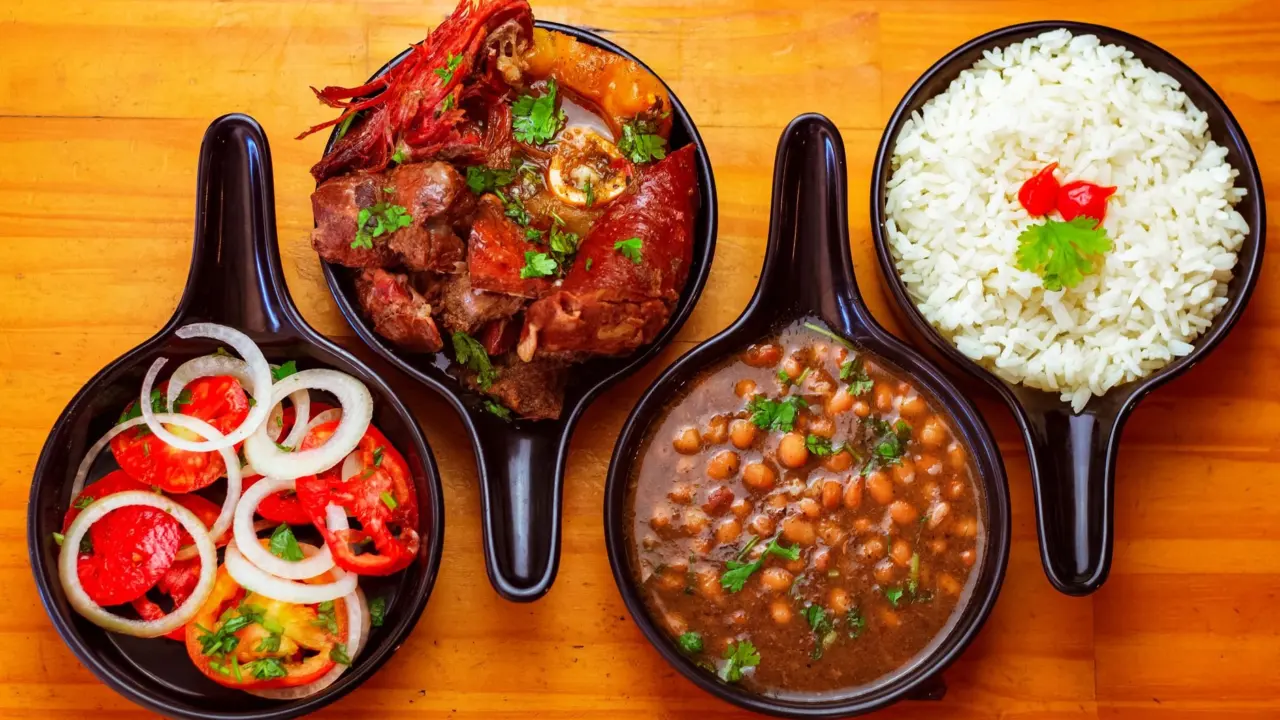
La bandera is the answer to the national dish question. One Dominican food guide says it is as close as we can get to having a national dish, and a hotel guide calls it the national dish par excellence. The name means “the flag”, after its colours: white rice, red beans and meat.
The plate is a lunch dish of white rice, stewed beans and stewed beef, pork or chicken. It usually comes with salad and avocado, and sometimes with tostones or fried ripe plantains. Order it at a comedor, a casual local eatery, or in a restaurant at midday. It suits anyone who wants one plate that shows how the cuisine fits together.
2. Mangú: the breakfast to start with
For breakfast, eat mangú. It is a mash of green plantains, usually served with sautéed red onions in vinegar. It is mainly a breakfast dish and sometimes appears on the dinner table. Visitors will meet it on breakfast or brunch menus, or as a side dish.
The full version pairs mangú with fried eggs, fried salami and fried cheese. Together they are known as Los Tres Golpes, “The Three Strikes”. The vinegared onions cut through the richness of the fried toppings, so do not skip them. If you want a lighter start, ask for the mash with just one topping.
Stews made for sharing
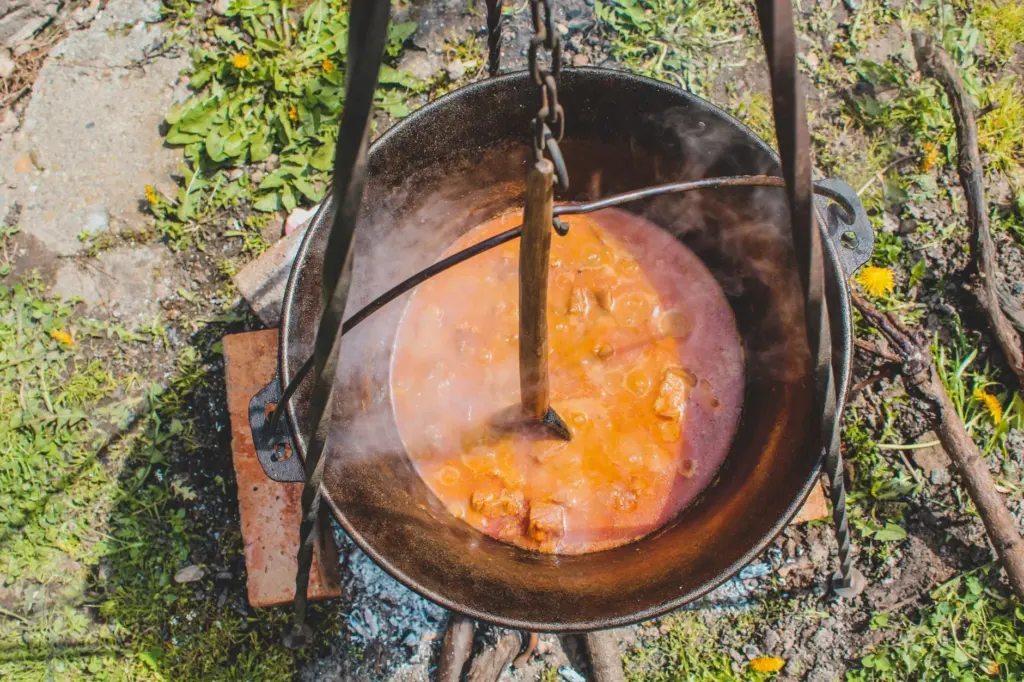
3. Sancocho
Sancocho is the stew for special occasions. Beef is traditionally the main meat, though some recipes use three to seven different kinds of meat. The showpiece version, sancocho de siete carnes, uses seven types of meat from four animals (pork, beef, chicken and goat), cooked with root vegetables and plantain.
Sancocho is typically served with white rice, slices of avocado and a local hot sauce. Add the rice and avocado to the bowl as you go, and add the sauce a little at a time. Because it is a celebration dish, expect it on weekends and holidays at home rather than as an everyday restaurant order. If you want to try it, ask whether a restaurant has it that day.
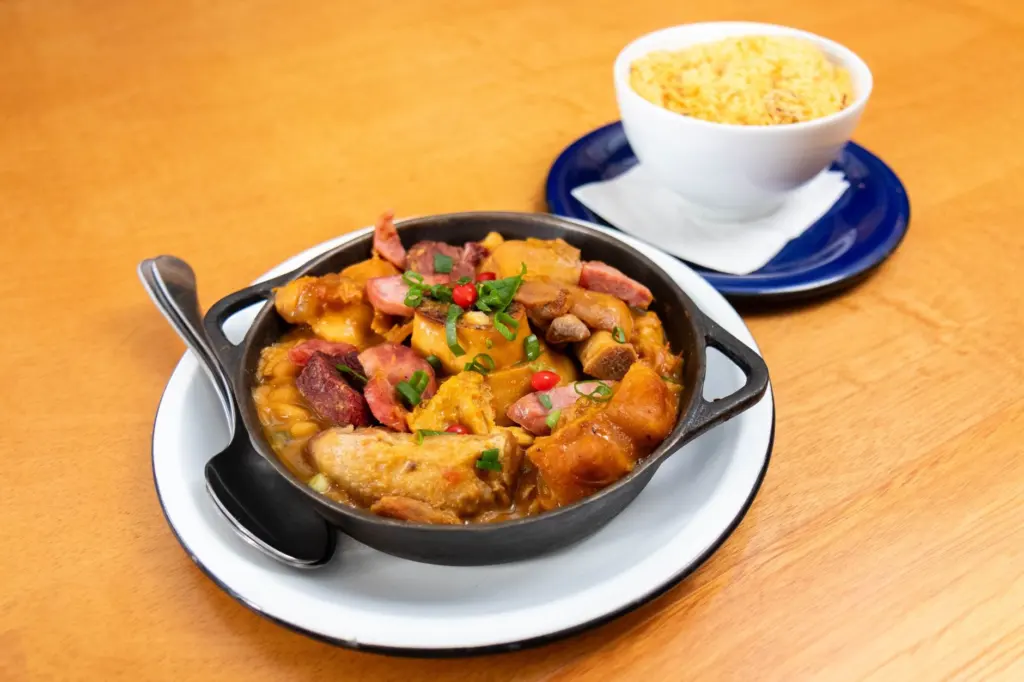
Fried plantains and pork
4. Tostones
The easiest description of tostones is a kind of French fry made of green plantains. Thick, one-inch slices are fried, pressed flat, then fried again to golden crispness. They are a common side dish in restaurants and at roadside stalls. They are the easiest first order for a cautious eater, as they go with fish, la bandera and nearly any grilled meat.
5. Chicharrón
Chicharrón is pork crackling, and it is huge in the Dominican Republic. It is a fatty side dish, so order it to share rather than as a main. It also turns up inside other dishes: fried pork rinds are an essential component of mofongo, either mixed in or served alongside.
Street food
6. Chimi
The chimi is the Dominican burger, and it is the star of street food on the island. It comes with onions, tomato, cabbage, mayo and ketchup. It is the dish to choose when you want something quick and cheap between meals, and the cabbage gives it a crunch that a standard burger lacks. It is unrelated to the Argentine sauce chimichurri.
7. Quipe
Quipe, also spelled kipe, is the Dominicanized kibbeh, a bulgur wheat and meat roll. The Dominican food guide calls it great as street food. Eat it hot as a handheld snack, with a hot sauce if you like heat. It is a good pick for someone who finds a full meal too heavy mid-afternoon.
Coastal dishes, sweets and drinks
8. Pescado con coco
Along the coast, simple grilled fish and pescado con coco (fish in coconut sauce) are easy to find, on beaches and in restaurants. Choose grilled fish for a plain plate and the coconut sauce when you want something richer. At Boca Chica beach, fried fish is served with tostones and a hint of lemon. For pescado con coco in Santo Domingo, one food blog recommends Jalao.
9. Habichuelas con dulce
Habichuelas con dulce is a sweet bean dessert, served each year during Lent and Easter. It is a seasonal dish, so plan your visit around that period if you want to taste it. Expect a dessert that treats beans as a sweet ingredient, which surprises many first-time visitors.
10. Morir soñando
The drink on the list is morir soñando, made of evaporated milk and orange juice. The guide calls it by far our most popular drink. Order it with a savory meal as a creamy, citrus contrast, or as a dessert replacement.
Where to find authentic versions
Match the dish to its natural setting. Breakfast dishes belong on breakfast menus, la bandera belongs at lunch, and coastal fish belongs on the coast. Coconut sweets are best from a local bakery or a colmado, a neighbourhood convenience store. The table summarizes where each everyday dish usually appears.
| Dish | Typical setting | Usual pairing | Planning use |
|---|---|---|---|
| Mangú | Breakfast or brunch menus, sometimes dinner | Fried eggs, salami and cheese | Start the day here; skip it if you want a light morning |
| La bandera | Lunch at homes, comedores and restaurants | Salad, avocado, sometimes tostones | Order at midday for the fullest local plate |
| Tostones | Restaurants and roadside stalls | Side to la bandera and fish | Easy add-on at any meal |
| Pescado con coco | Beaches and restaurants | Grilled fish as the plain alternative | Choose on coastal days |
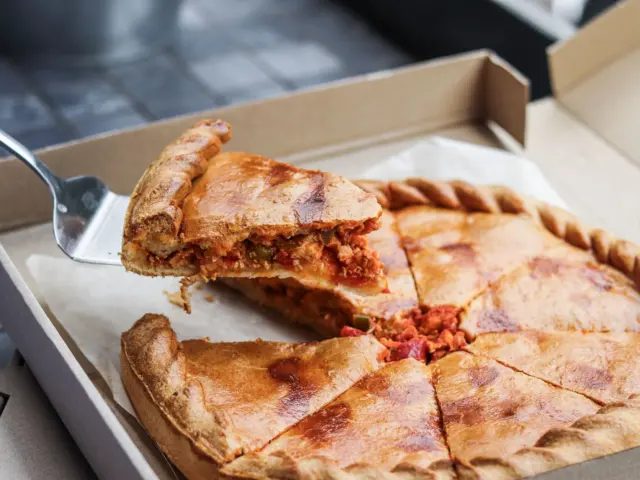
| Pastelitos | Snack-style, deep-fried or baked half-moon pastry | Usually a meat filling | Handy portable snack |
Figures and settings come from Dominican Cooking’s food guide and Celebrity Cruises’ Dominican food overview.
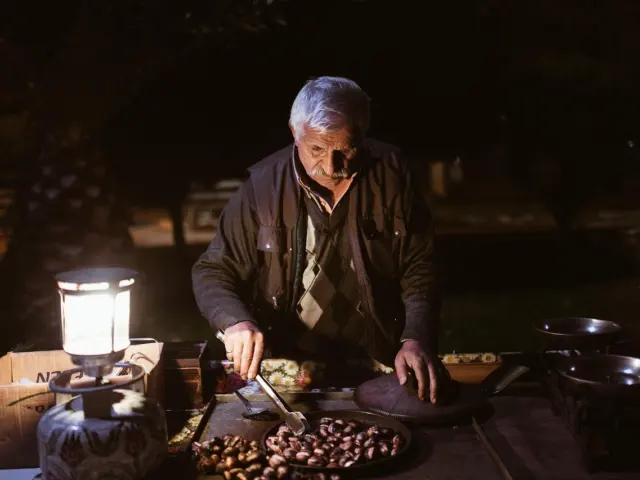
Street food is part of that picture. Chimi and quipe are the standouts, and tostones are sold from roadside stalls. Pick stalls where the food is fried or assembled in front of you, and look for places locals are using.
More dishes worth ordering
- Pica pollo: the country’s own deep-fried chicken, a straightforward choice if you want something familiar.
- Mondongo: a stew of beef, cow, pig or goat tripe, suited to adventurous eaters.
- Casabe: cassava bread, the oldest item here, and a plain accompaniment to stews.
Next food destinations
If this tasting list helps, Taste France: 15 Famous Foods To Try In 2026 (From Croissants To Cassoulet) – Bionicbites and Taste Hawaii: 12 Iconic Foods To Try On Your First Trip (And Where To Find Them) – Bionicbites take the same dish-by-dish approach to other destinations.
Frequently asked questions
What is the national dish of the Dominican Republic?
La bandera, a lunch plate of white rice, stewed beans and stewed meat. It is described as the closest thing to a national dish rather than an officially named one.
What should I eat for breakfast?
Mangú, mashed green plantains with sautéed red onions, is the traditional choice. Order the version with fried eggs, salami and cheese for the full Dominican breakfast.
Where can I find authentic food?
Look for comedores and local restaurants at lunch, beachside fish stalls on the coast, and a neighbourhood bakery or colmado for coconut sweets. Roadside stalls sell tostones and other fried snacks.
Is street food safe?
It varies by vendor, so judge each stall individually. Favour food cooked or fried fresh and served hot, and check current official travel health guidance, such as the CDC’s, before you travel.