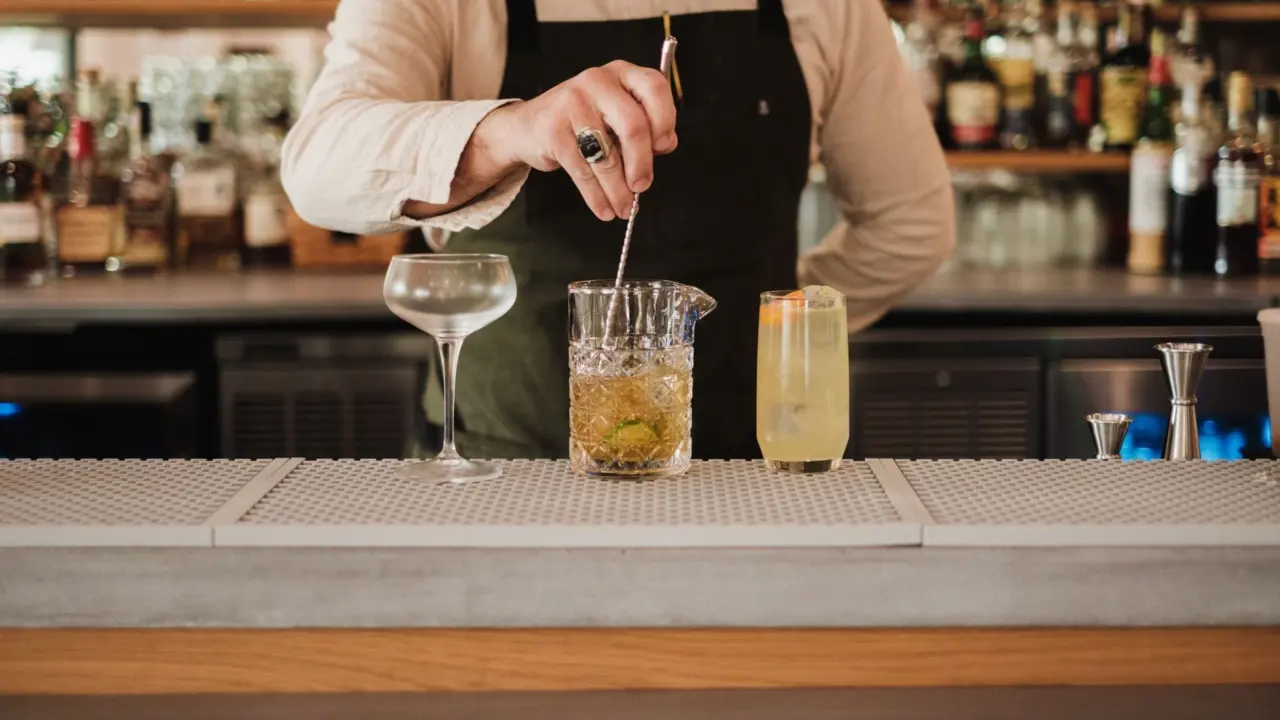
Standing at a crowded counter with no idea what to order at the bar? Pick a simple mixed drink or a classic, say it clearly, and ask the bartender what they enjoy making right now.
Ordering well is part of eating out generally. how to choose a good restaurant covers the venue, and this guide covers the bar itself: what to say, what to expect in the glass, and what to ask for when you want less alcohol.
Common misunderstandings about ordering at a bar
Most hesitation at the bar comes from assumptions that do not hold up. People worry that a plain order looks unadventurous, that a fussy order earns respect, or that every bar charges the same. The contrasts below turn those worries into decisions.
| Common assumption | What holds up | Planning use |
|---|---|---|
| A simple drink looks unadventurous | Many simple bar drinks use only two ingredients, and just about any bartender will instantly know what you want | Name a basic mixed drink when you are unsure; nobody needs it explained |
| A complicated order impresses the bartender | Nightclub drinks favor simplicity, speed and familiarity; complicated martinis and heavy-garnish drinks are often skipped | In a packed room, choose something the bar can make fast |
| Vodka soda and vodka tonic are the same drink | Tonic water replaces soda water, which makes the drink slightly more bitter | Say soda if you dislike bitterness, tonic if you want it |
| Prices match at every bar | Drink prices at nightclubs are higher than at standard bars | Glance at the menu before ordering in a club-style venue |
The simple-drink and tonic points come from a vodka producer’s guide to easy bar orders, and the nightclub points from a nightclub drinks guide.
Safe orders when you are unsure
Simple mixed drinks
The same vodka producer’s guide lists a handful of low-risk orders that bartenders know on sight. They suit anyone who wants a recognisable drink without studying a cocktail list:
- Vodka soda: the plainest choice, with soda water as the mixer.
- Vodka tonic: the same build with tonic water, so it tastes slightly more bitter.
- Vodka cranberry: a fruitier option for people who prefer something sweeter than soda.
- Moscow Mule and Bloody Mary: both appear on the list of common simple orders, and both give you more flavor than a plain highball.
- Dry martini: the stronger, more formal pick on that list.
Draft beer and the bartender’s pick
If the cocktail list feels like a test, a draft beer is the lowest-pressure order in the room. Ask what is on draft, then choose by the style you already know you like. If nothing on the menu appeals, use a line from a roundup of bartenders’ favorite orders: “What’s your favorite to make right now?” It hands the decision to the person who knows the back bar, and it works whether you drink spirits, beer or neither.
How to order a drink politely
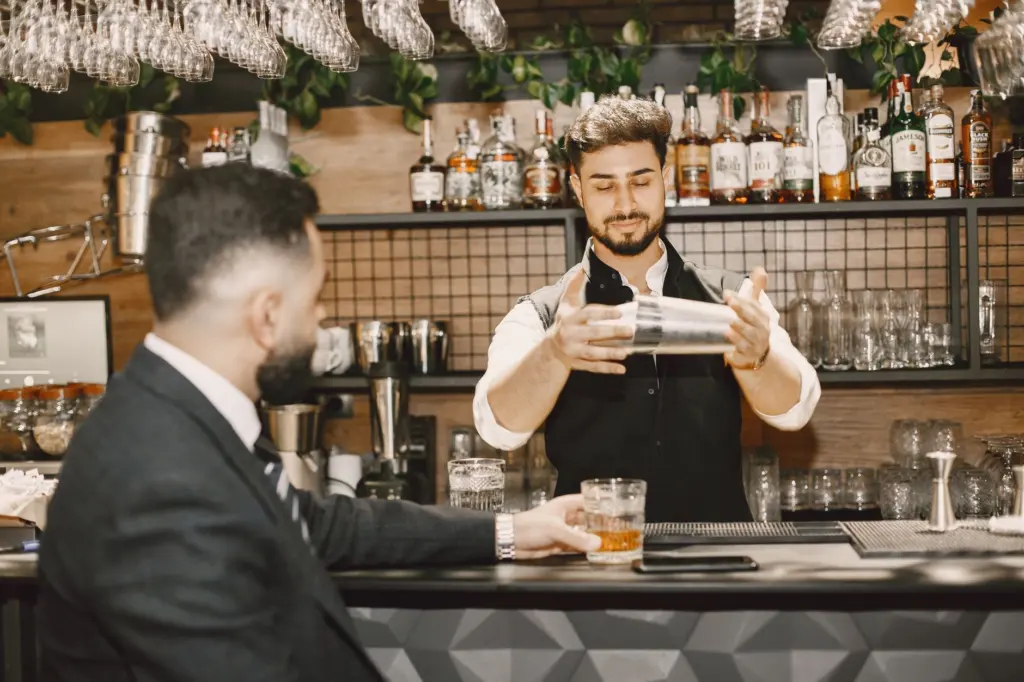
Polite ordering is mostly about being easy to serve. Wait until the bartender looks your way, state the drink by name, and add a preference only if it matters. A short script covers most situations:
- Open with the drink: “Vodka tonic, please,” or “Can I have an Old Fashioned?”
- Add a single preference if needed: “Slightly less sweet, please,” or “On the rocks.”
- If you are undecided, give a taste cue: “I like citrusy drinks. What would you suggest?”
A cocktail-bar writer quoted by a food-tour company’s bartender guide says bartenders will put more love and attention into a drink when they expect you to enjoy it. That is a reason to describe what you like rather than order something random. In busy rooms, especially club-style venues, keeping the order simple ensures faster service and a smoother night.
Classic cocktails worth knowing
Classics work well when you want a known flavor without a long conversation. Each has a defined recipe, so a bartender can make it without questions and you can tell what you are getting.
- Old Fashioned: whiskey with sugar, bitters and citrus peel, according to the bartender-favorites roundup, which notes that it almost always comes up when bartenders name a favorite. It suits whiskey drinkers who want a spirit-led glass rather than a sweet one.
- Margarita: the same roundup describes margaritas as classic, spicy or fruit-infused, with sweet, tart and strong in balance. Name the version you want, since the style changes the drink.
- Negroni: equal parts gin, Campari and sweet vermouth with an orange peel garnish, as described by the food-tour guide. A good choice if you want to order a drink that has a fixed formula.
- Daiquiri: rum, sugar syrup and lime. It suits people who like citrus and want a short, uncomplicated recipe.
- Whiskey Sour: built on lemon juice, with optional egg white for a smooth, velvety finish. Say whether you want the egg white.
- Espresso Martini: coffee plus vodka, shaken to a foamy top. It is the pick for a later, livelier part of the evening.
Choose by what you already like: whiskey leads to the Old Fashioned or Whiskey Sour, citrus leads to the Daiquiri or Margarita, and gin leads to the Negroni.
Typical drink prices
Price ranges differ by venue, so treat these as ballparks and check the menu. For club-style bars, the nightclub guide gives these typical figures:
- Standard mixed drinks: typically $12 to $18.
- Shots: typically $10 to $18, with premium shots at $18 to $30+.
- Top-shelf mixed drinks: typically $18 to $25+. They cost more but are smoother and are often chosen for celebrations.
Alcohol-free orders are not automatically cheap. A guide to ordering when you are not drinking puts non-alcoholic beer at $5 to $8, roughly the same as a regular beer, and non-alcoholic cocktails often at $10 to $14. Tonic water with lime is the thrifty exception at $3 to $6 depending on the bar.
Low-alcohol and alcohol-free options
Wanting less alcohol is a normal reason to be at a bar, and the easiest orders look like what everyone else is holding.
Non-alcoholic beer
Non-alcoholic beer is the easiest choice because it looks and feels like beer. Ask for it by name: “Do you have any non-alcoholic beer?” Bartenders hear the question constantly, and asking directly is faster than scanning the fridge.
Tonic water with lime
Tonic water with lime is a low-alcohol option that resembles a gin and tonic. It suits a casual round where you want to hold a familiar-looking glass without ordering a full mocktail.
Mocktails
Mocktails give you the most flavor when the bar takes them seriously. The same guide notes that Seedlip, Lyre’s and Monday gin are common non-alcoholic spirits used by bartenders. If the menu has no mocktail list, give the bartender a flavor direction, such as citrus or ginger, and let them build it.
Fitting the bar into a night out
A bar order sits inside a larger evening. If you are heading to a chef-led dinner, such as the format explained in what is omakase, a quick, simple order at the bar leaves the pacing to the meal. If the night began with a car handed over at the door, the valet is a separate tip; How Much To Tip Valet At A Restaurant: Simple Rules And Dollar Amounts For 2026 – Bionicbites covers it.
Frequently asked questions
| Question | Answer |
|---|---|
| What is a Tommy’s margarita? | A margarita that uses agave nectar instead of orange liqueur. It is served in a short glass on the rocks with no salt rim, as described by the bartender guide. |
| Is plain water a good thing to order when I am not drinking? | It can read as disinterest. The non-drinking guide suggests adding lime or pairing it with another drink so you have something with more presence in your hand. |
| Is coffee a sensible bar order? | It works best at dinner-oriented venues rather than pure drinking bars, and caffeine late in the evening is a trade-off to weigh. |
| Are energy drinks a good alcohol-free choice? | Generally not outside clubs. The guide calls them too caffeinated, too sweet and visually distinctive. |