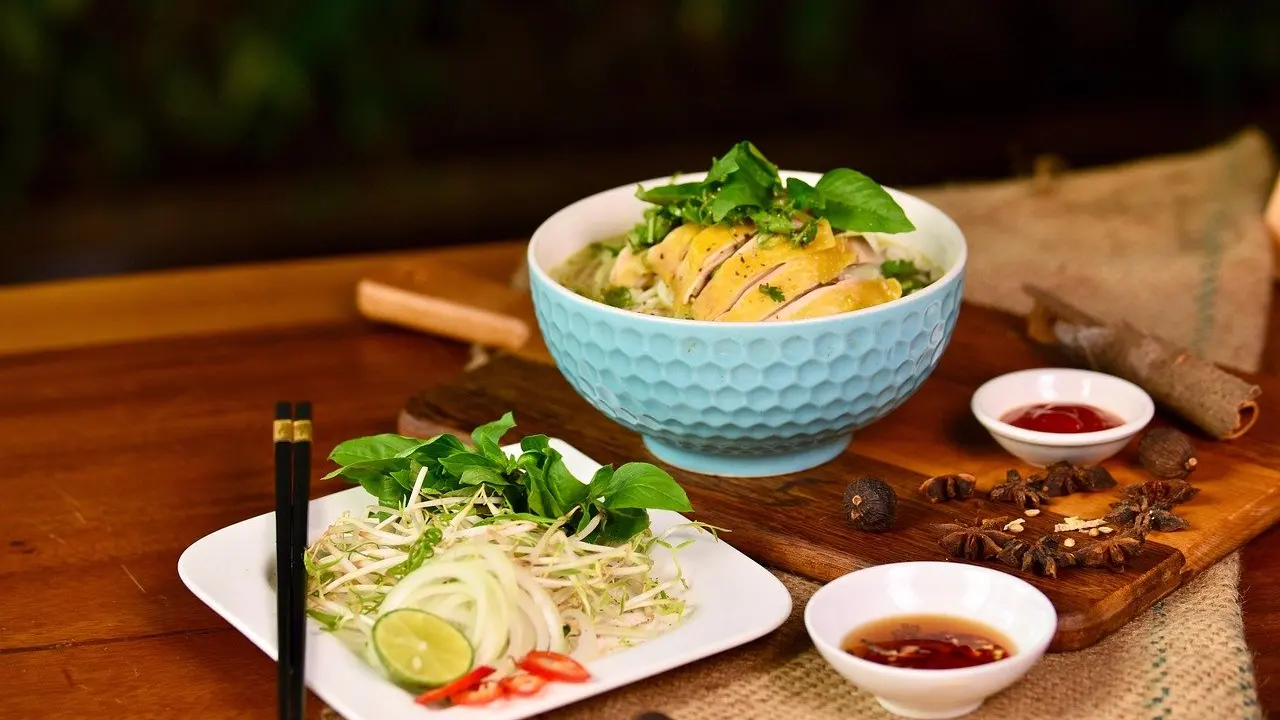
To learn how to eat pho, taste the broth first, then add torn herbs and lime, and dip meat in hoisin or Sriracha rather than stirring sauce in. Chopsticks handle noodles, the spoon handles broth, and slurping is fine.
Pho is an easy bowl to practise on, and the habits carry over to other meals. If you are still deciding where to sit down, start with how to choose a good restaurant, then use this guide once the bowl arrives.
Why the order of seasoning matters
Pho is a Vietnamese noodle soup built on a broth, and a Vietnamese restaurant’s first-timer guide describes it as typically a rich, clear beef or chicken broth with rice noodles and meat. That broth is simmered for hours, sometimes more than 12 hours, with bones, spices and aromatics. The long cooking is the reason the bowl arrives already seasoned, and the reason your additions should support the broth rather than cover it.
A good broth is crystal clear, like a French consommé. It is a delicate base, and heavy sauce or a pile of garnish can flatten it quickly. The noodles are flat rice noodles cooked just until tender, so they soften further the longer they sit in hot broth. That is a practical argument for not fussing over the bowl for too long before you start eating.
The garnishes arrive on the side so that you can decide how far to take the bowl. Chef and author Andrea Nguyen’s guide compares garnishing pho to building your own hamburger, with the result that you can have it your way. The steps below are a sensible default for a first bowl, not a rule that anyone enforces.
Order of add-ins, step by step
Work from the gentlest change to the strongest, and stop whenever the bowl tastes right to you. The sequence below follows the guidance on tasting first, herbs next and sauces last.
- Taste the broth plain. Locals often taste the broth first, before adding herbs, which tells you what the kitchen intended and what the bowl still needs.
- Squeeze in lime. A squeeze of lime brightens the whole bowl. Add a little, then taste again before adding more.
- Tear in the herbs. Strip the leaves from their stems, tear them up and drop them into the bowl. Add bean sprouts if you like crunch.
- Add chile if you want heat. Dip thin slices into the hot broth rather than dropping in a heap.
- Finish with sauce on the side. Use hoisin and Sriracha in a small dish for dipping, not in the broth.
| Stage | What to do | Why it helps |
|---|---|---|
| Broth | Taste before adding anything | Shows what the kitchen intended and what the bowl needs |
| Lime | Squeeze a little into the bowl | Brightens the whole bowl |
| Herbs | Strip from stems, tear, drop in | Releases aroma into the hot broth |
| Chile | Dip and wiggle thin slices in hot broth | Releases the chile’s oil without flooding the bowl with heat |
| Sauces | Dip meat in a small dish of hoisin and Sriracha | Keeps the broth intact |
These stages draw on the first-timer advice from Pho Hot VA and the garnishing notes from Viet World Kitchen.
Herbs and chile
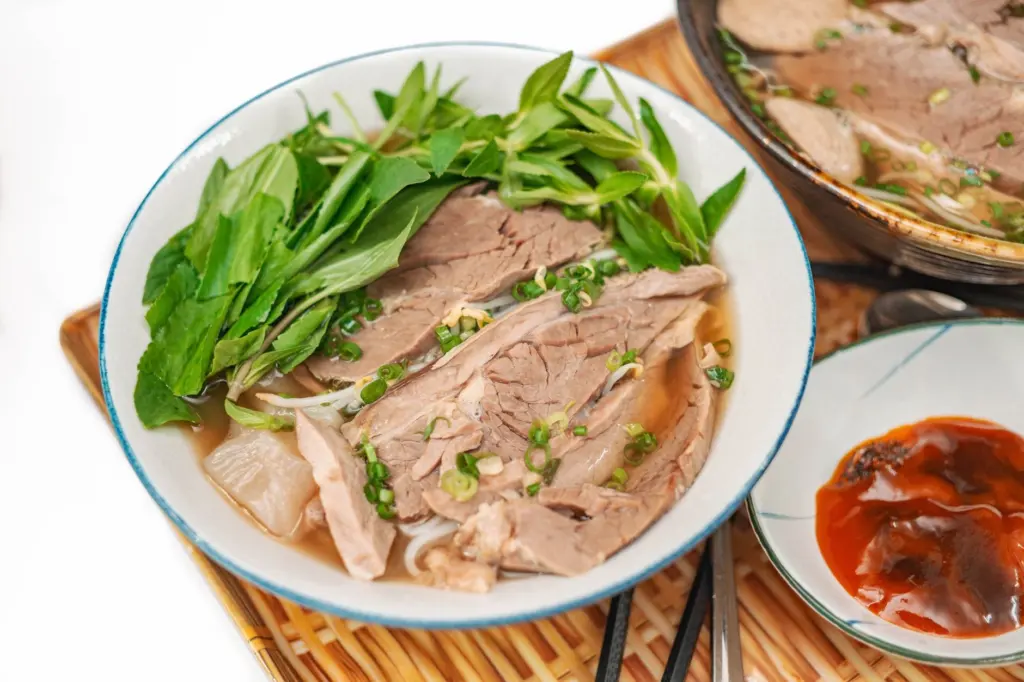
Basil is the herb most bowls come with, and the leaves are best ripped up and sprinkled into the soup’s broth rather than left whole. Tearing is the point: it is what turns a garnish into part of the soup. Bean sprouts need no preparation and add crunch, so drop them in if you want texture and leave them on the plate if you do not.
Chile works differently from the herbs. Thin slices dipped and wiggled in the hot broth release their oil, which gives you a controllable amount of heat that you can raise slice by slice.
Hoisin and Sriracha
Hoisin and Sriracha usually come on the side in Vietnamese restaurants, and the way locals use them is to dip their meat in a small dish rather than mixing sauce directly into the broth. Many diners do squirt sauce straight into the bowl, but Nguyen does not favor it because it obliterates a well-prepared, nuanced broth. There is also a reason to hold back that has to do with the cuisine: in Vietnam the sauces are less prominent than they tend to be abroad, so it is worth resisting the habit of saucing every bowl by default.
The practical rule is to taste the broth, then dip. If the meat needs more flavor, add sauce to the dish, not to the soup. The soup stays clear, and you still get the sweetness of hoisin or the heat of Sriracha on every bite of meat.
Chopsticks and spoon
Use both utensils together: chopsticks to grab the noodles and meat, and the soup spoon to sip broth between bites. The soup spoon is often a deep, flat-bottomed spoon, which holds more broth than a typical dinner spoon. Nguyen describes the setup as chopsticks in one hand to pick up the noodles, the soup spoon in the other. Vietnamese restaurant Vietnam e Cafe specifies chopsticks in the right hand and the spoon in the left for right-handed diners.
The same restaurant stresses sipping the broth first while you work the noodles with your chopsticks. The broth is the soul of the bowl, and sipping early keeps you from burying it under condiments before you have tasted it.
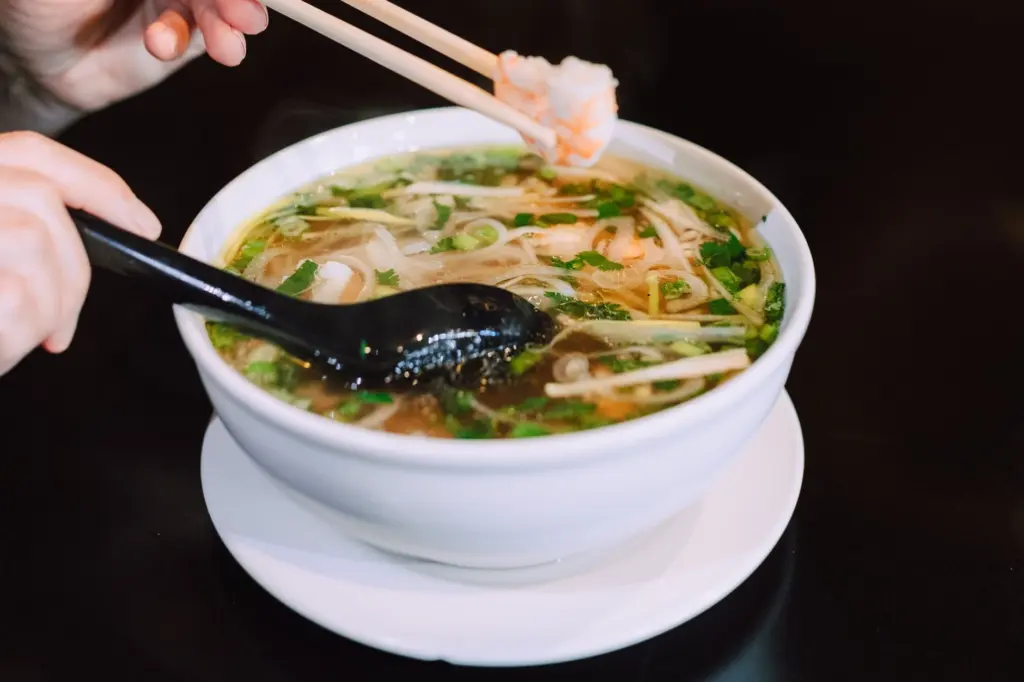
If you struggle with chopsticks, the spoon can help. As one pho forum contributor put it, there is really no other rule about piling food in your spoon beyond tradition-based best practices. A little noodle, a piece of meat and some broth in the spoon is a perfectly acceptable way to eat a mouthful.
Slurping and other table manners
Yes, slurping is polite here. Pho Hot VA says slurping is culturally appropriate and helps enhance the flavor, so there is no reason to eat quietly out of caution. Vietnam e Cafe goes further and says it is fine, even preferred, to stick your face into the bowl while slurping, which also avoids messy splatter. Drawing noodles in with the broth is a technique, not a lapse in manners.
The end of the meal has its own habit. Once the noodles are gone, you can raise the bowl to your lips with both hands and polish off the broth. Vietnam e Cafe says outright that this is not impolite, so you can lift the bowl without worrying about how it looks.
Taking the habits to other cuisines
The common thread is to taste first and to let the food set the pace. Every cuisine has its own conventions, though, and the rules for one do not transfer to another. For a different set of manners, How To Eat Sushi Like A Pro: A Simple Beginner’s Guide For 2026 – Bionicbites covers eating sushi for beginners. If you are ordering rather than eating, What To Order At An Indian Restaurant: Smart, Flavorful Picks For First-Timers (2026) – Bionicbites offers first-timer picks.
Frequently asked questions
Is it rude to bite the noodles off instead of slurping them?
No. A pho forum contributor says there is nothing wrong with biting the noodle off, though doing so shortens the strands, whereas slurping keeps the long noodles intact.
Do I have to finish the whole bowl?
It is common to finish the entire bowl, broth and all, as a sign of appreciation. If you are too full, there is no pressure to force it.
What does Thai basil add to pho?
The ubiquitous purple-stemmed Asian or Thai basil contributes sweet, anise-like flavors, and Pho Hot VA describes it as adding a sweet, slightly spicy note.
Is there a correct amount of food to put on the spoon?
No strict rule exists beyond tradition-based best practices, so build each spoonful the way that suits you.