How to eat ramen comes down to a short sequence: taste the broth, lift a modest amount of noodles with chopsticks, slurp, and keep going, because chef Ivan Orkin puts a fresh bowl’s best window at about 10 minutes.
The order matters more than any single rule. If you are still deciding where to eat, our guide on how to choose a good restaurant covers the wider picture, and the sections below cover what to do once the bowl is in front of you.
Why the order of eating matters
A bowl of ramen changes while you eat it, so the habits around it are practical rather than ceremonial. Noodles keep absorbing broth after the bowl lands on the counter. One Tokyo guide notes that it is common to eat ramen quickly for exactly this reason. Orkin’s own estimate, from his Bon Appétit demonstration, is that noodles have about 10 minutes of life once served.
That timing explains the rest of the routine. You taste the broth first because the bowl is meant to be judged as the cook made it. You slurp because it cools hot noodles as they travel to your mouth. You hold back on extra seasoning because you cannot take it out again. The aim is to reach the last noodle while it still has some spring.
The same logic applies at home. If you pour broth over noodles in your own kitchen, sit down immediately and start with the soup, because the noodles begin absorbing it straight away.
Know your broth before you order
The broth sets the tone of the whole bowl, so knowing the main styles helps you pick one that suits your appetite and tells you what you are tasting first. The four names you will see most often are shoyu, shio, miso and tonkotsu.
| Broth style | Base and character | Planning use |
|---|---|---|
| Shoyu | Usually based on chicken bones and always includes soy sauce | A dependable starting point if you want a classic, soy-driven bowl |
| Shio | Often based on chicken or seafood; appears clear or golden | Suits you if you prefer a lighter-looking broth |
| Miso | A specialty of Hokkaido; uses miso paste in the soup | Choose it when you want the fermented, savoury note of miso |
| Tonkotsu | Pork bones boiled for hours; thick, creamy and rich in flavour | Best when you want a heavy, filling bowl; expect richness |
These descriptions come from a Tokyo ramen-eating guide.
The practical takeaway is to match the broth to how hungry you are. A shio or shoyu bowl lets you notice the toppings and the noodles. Tonkotsu is thick and rich, so the bowl itself already feels like a full meal.
Eating the bowl, step by step
Follow this sequence from the first sip to the last noodle.
- Sip the broth first. It is customary to taste the broth before touching the noodles, and the soup is best enjoyed by itself before the noodles, as Instant Ramen’s etiquette guide explains.
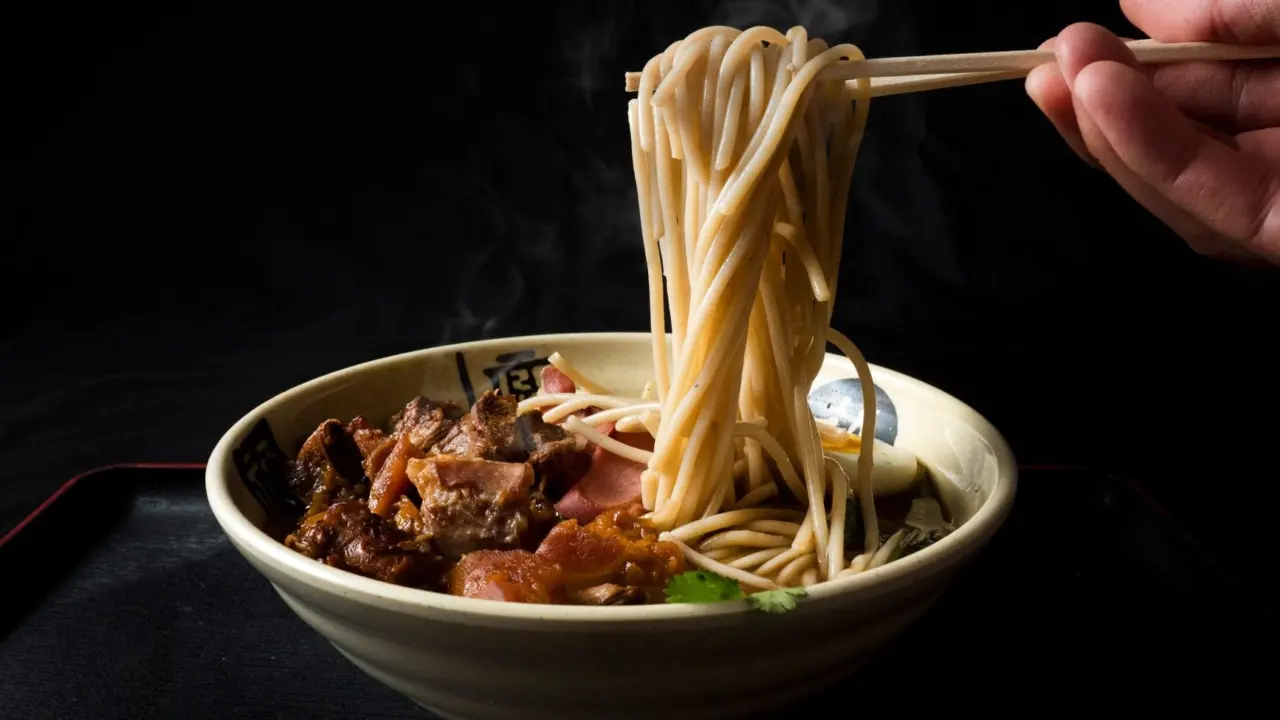
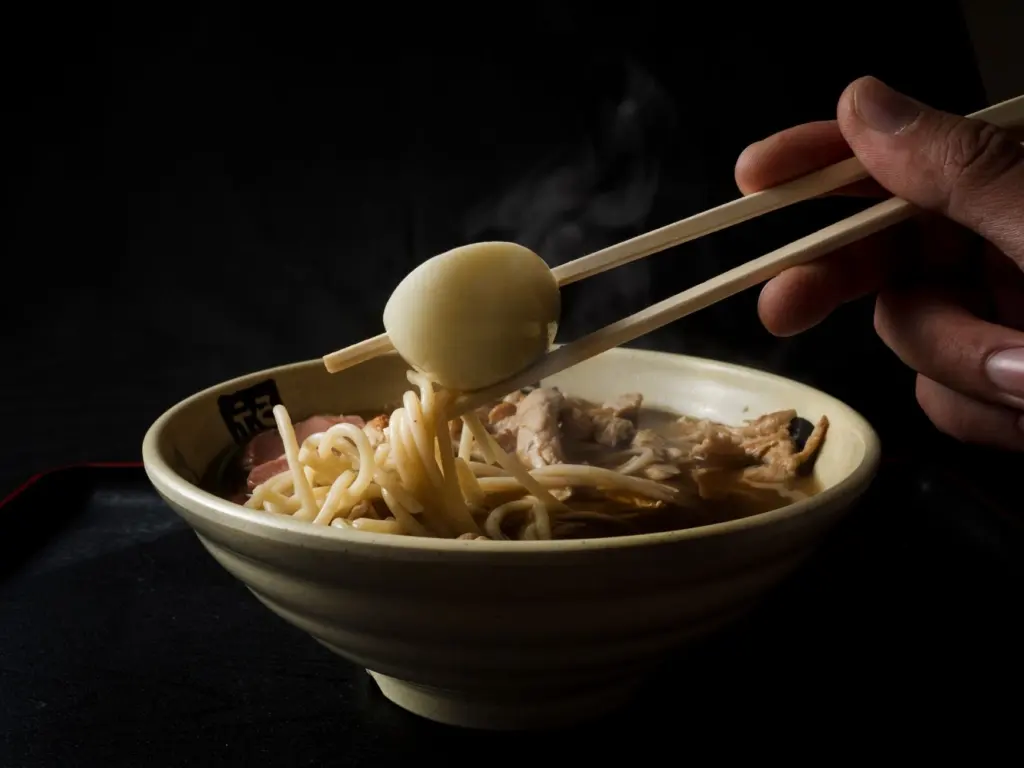
- Take a small amount of noodles. Orkin’s instruction is to take less than you think you need and pull it free from the mound with your chopsticks.
- Slurp. Orkin’s technique is to make your mouth into a little O, as if drinking a steaming hot cup of coffee, and draw the noodles in.
- Alternate noodles, toppings and broth. Keep moving through the bowl rather than letting it sit.
- Season late. Add condiments only after you have tried the original bowl (more on this below).
Is slurping rude?
No. Slurping is not only acceptable in Japan; it is encouraged. The reasons are functional: a hearty slurp helps cool hot noodles and enhances flavour through aeration. A second guide gives the same first reason, that slurping helps cool your ramen down. If you are in a setting where you feel self-conscious, you can still pull the noodles in with some air rather than lifting them silently, since cooling is the point.
Chopsticks and the renge
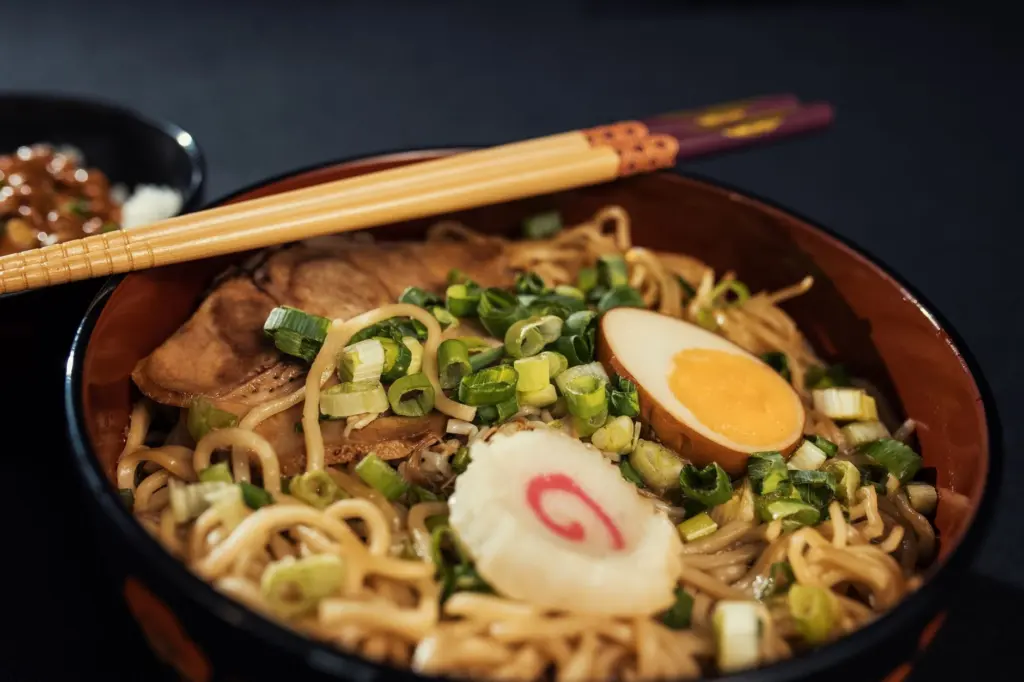
Orkin names two tools, your chopsticks and your renge, the ramen ladle. Chopsticks handle noodles and larger toppings. The renge is for broth, and it is perfectly acceptable to use it to scoop up broth and small toppings. Two chopstick habits are worth knowing:
- Do not stab or pass food. Avoid using chopsticks to stab at food or pass items between chopsticks.
- Rest them on top of the bowl. If you pause, place your chopsticks on top of the bowl, not in it.
Toppings and when to add things
Most toppings arrive in the bowl, so you do not decide when to add them; you decide when to eat them. What you do add yourself are table condiments, and the guidance there is about restraint and timing.
The toppings you will meet
Two of the most common are chashu and ajitama. Chashu is slices of tender, seasoned pork that add richness and volume to the dish. Ajitama is a seasoned egg whose yolk is usually semi-liquid, according to the Tokyo guide. A runny yolk enriches the broth as it breaks, so eat the egg midway through if you want the soup to change gradually, or save it if you prefer the broth unaltered at first.
When to add condiments
Use table condiments sparingly and only after you have tried the original broth and components, per Tasting Table. A practical cue comes from Instant Ramen’s guide: after you have finished half of the ramen or so, feel free to add flavour changers. Adding them then gives you a clear before-and-after, and it keeps the cook’s intended balance for the first half of the bowl.
Pacing, pausing and finishing
Because the noodles keep changing, eat steadily. If you want a break, rest your chopsticks across the top of the bowl and return soon. Do not let a bowl sit while you talk; the ten-minute window above is the reason ramen shops tend to feel quick.
Ramen is one of several Japanese meals with its own habits. If you are comparing, How To Eat Sushi Like A Pro: A Simple Beginner’s Guide For 2026 – Bionicbites explains how that meal is handled. And if your night out starts with a car, How Much To Tip Valet At A Restaurant: Simple Rules And Dollar Amounts For 2026 – Bionicbites covers that part.
Frequently asked questions
Do I have to finish the broth?
No. Finishing your meal, including the soup, is generally seen as a sign of appreciation in Japan, but leaving a little ramen broth is far more acceptable than leaving rice. Salt is a good reason to stop early: a single bowl can sometimes contain more than a day’s recommended sodium intake.
Can I ask for a lighter bowl?
At some shops you might be able to request “usume” for less salt, or “abura sukuname” for less oil, according to the same OK Ramen guide. Availability varies, so treat it as a polite request rather than a guarantee.
What if I am unsure how to customise my order?
Customisation choices at ramen shops are not extra-cost options. If you are unsure, the Tokyo guide suggests saying “omakase”, leaving the choices to the cook.
Can I pay by card at a ramen shop?
Not always. Many ramen shops in Japan do not accept credit cards, so carry cash when you go.