| At the table | What it means | Planning use |
|---|---|---|
| You cook your own meat on the grill | The pace of the meal is yours, not the kitchen’s | Treat the meal as an activity. Leave time and keep your hands free for tongs and scissors. |
| Banchan are shared by everyone | Take a small portion at a time rather than loading your plate | Sample the side dishes first and return to them between pieces of meat. |
| Wraps are eaten in one bite if possible | A polite wrap is a small wrap | Build each ssam modestly so it fits in your mouth whole. |
| Wasting food is frowned upon | Over-ordering carries a social cost as well as a financial one | Order what you can consume, then add a second round only if you are still hungry. |
| A burnt grill can be swapped | Staff will change the grill top for you | Ask early instead of grilling on a blackened surface. |
These customs come from a Korean BBQ restaurant’s etiquette guide and a beginner’s guide to Korean BBQ.
How to eat Korean BBQ: cook a few pieces of meat at a time, wrap them in lettuce with ssamjang, and eat each wrap whole. Check whether your restaurant lets you grill or cooks for you.
For the wider approach to eating well abroad, read our guide on how to find authentic local food when traveling, then use the walkthrough below once you are seated at a grill.
What the table setup means for your first meal
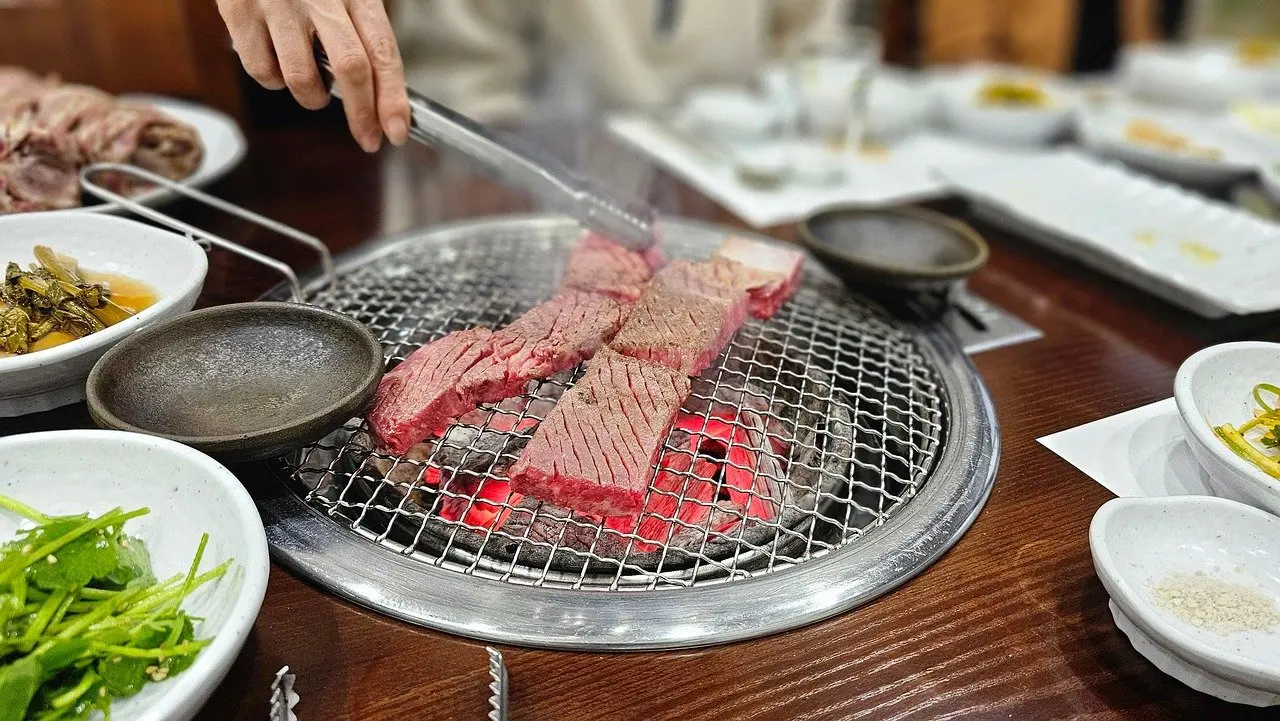
A Korean BBQ table is built around a grill in the middle of the table, and unordered small plates start landing on it before you have asked for anything. That surprises many first-timers, but it is the normal start of the meal, not a mistake in your order.
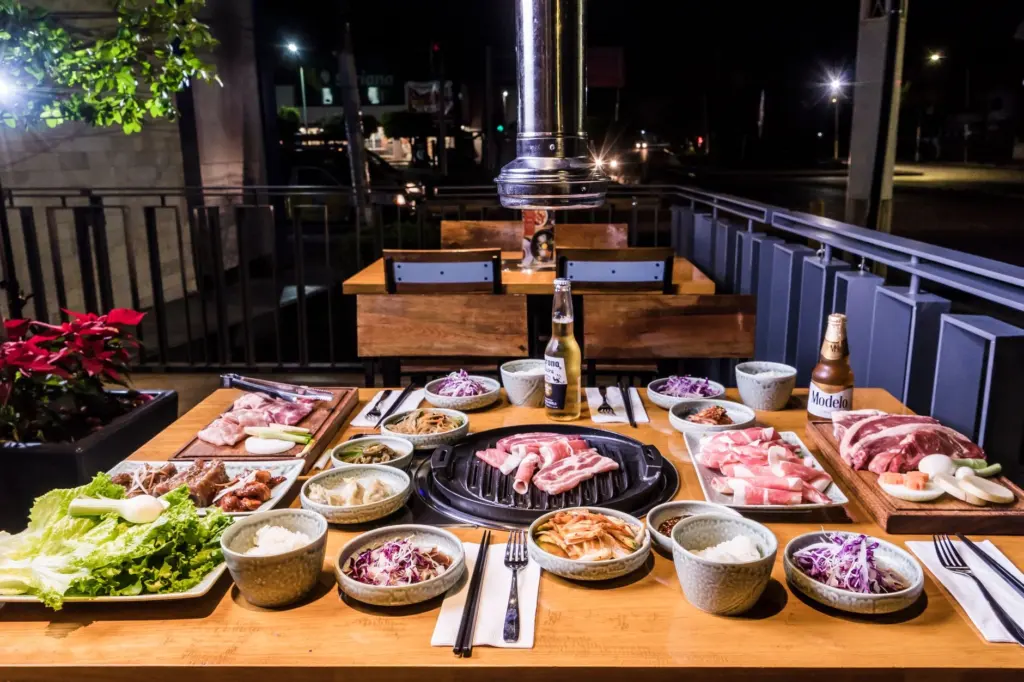
Who works the grill depends on the restaurant. The grill is often built into the table, although some places cook the meat for you. That changes how you should plan the meal:
- If you cook: start with a cut that is hard to ruin. Thin bulgogi cooks quickly and is a friendly place to start, so order it before anything thick.
- If staff cook: your job shrinks to wrapping and eating. Spend the saved attention on the side dishes and sauces, and eat the meat as it arrives.
- If you are unsure: ask when you sit down. The question costs nothing and saves you from reaching for tongs that you were not meant to touch.
Choosing meats, soup and drinks
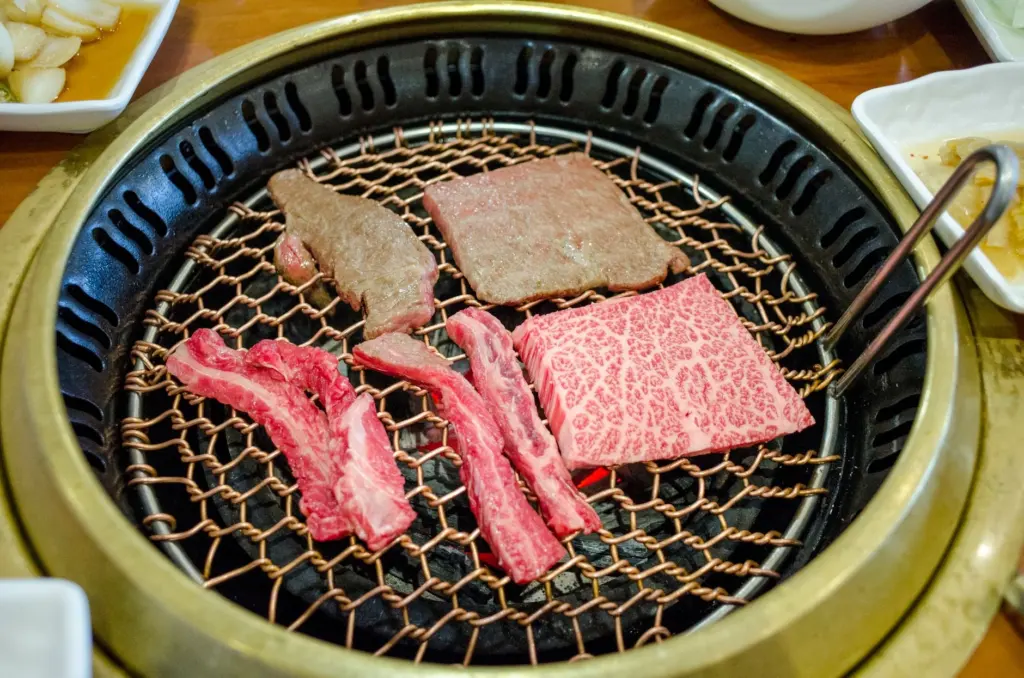
A good first order balances one marinated cut, one unmarinated cut and something to drink or sip alongside. Every cut below is a different trade-off between sweetness, fat and effort at the grill.
Beef and pork cuts
- Bulgogi: thin slices of beef in a sweet-savory marinade that includes soy sauce, sugar and sesame oil. It cooks quickly, which makes it the most forgiving choice for a beginner. Marinating times vary by cut, and thin bulgogi can pick up plenty of flavor in as little as 30 minutes.
- Galbi: marinated beef short rib, cut across the bones or butterflied. Short ribs are marinated for hours or overnight, so expect a richer, sweeter result than bulgogi. Choose galbi when you want a centrepiece cut.
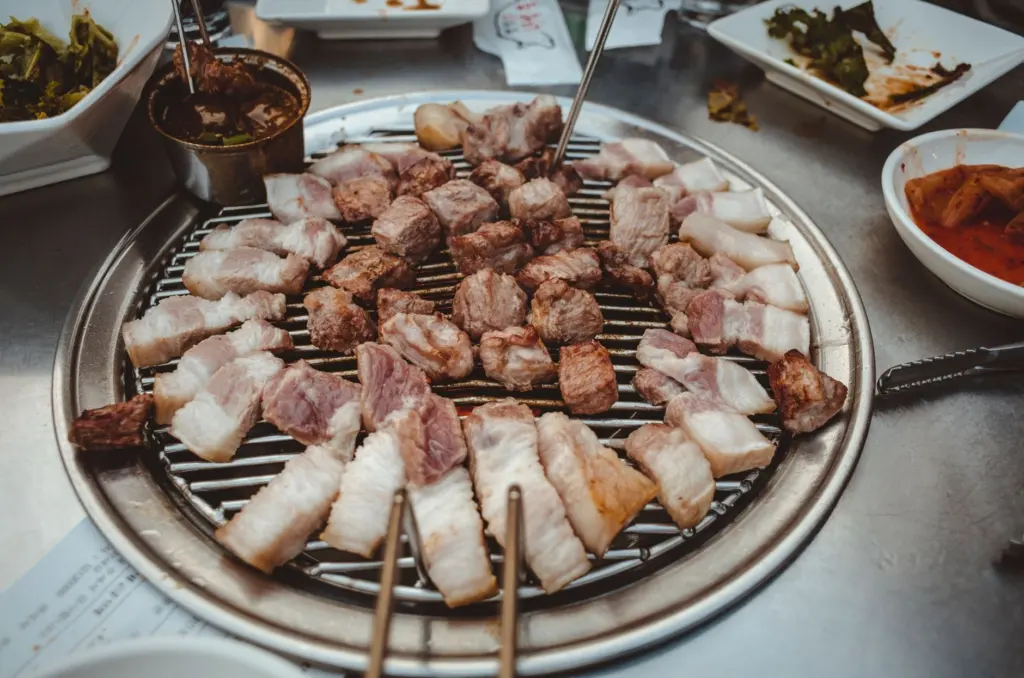
- Samgyeopsal: thick slices of pork belly, commonly grilled without a sweet marinade. It suits anyone who prefers plain, fatty meat dipped in sauce over sweetness. A Korean chef interviewed by Business Insider was emphatic about it: always order the pork belly.
Soup and drinks
The same chef also advises ordering some kind of soup or stew, such as jjigae, to push the flavor of the protein. Treat it as a shared dish for the middle of the table, not a starter.
For drinks, soju is the national drink of Korea and the natural pairing with grilled meat. Its pouring custom matters, so read the etiquette section before the first round.
Banchan and sauces
Banchan are the small side dishes that arrive without an order. They are not a starter to finish before the meat comes; they stay on the table and keep circulating throughout the meal. Sauces are separate and go on the meat or inside the wrap.
Banchan to recognise
- Kimchi: fermented vegetables, commonly napa cabbage or radish, seasoned with ingredients that may include chile, garlic, ginger and fish sauce. It is the banchan most likely to appear, and it works inside a wrap as well as on the side.
Sauces and dips
- Ssamjang: the thick paste you spread in a lettuce wrap, with the meat.
- Spicy soybean and chili paste: one of the sauces typically served with Korean BBQ.
- Sesame oil with salt and pepper: the plain dip served alongside, which suits unmarinated pork belly better than sweet, marinated cuts.
If you are cooking at home after your trip, remember that marinade that touched raw meat should not be reused as a table sauce unless you boil it first.
Grilling the meat, step by step
The grilling routine is short, and most beginner mistakes come from rushing it. Work through these steps in order:
- Pick up the tongs. Use the provided tongs for raw meat and keep your personal chopsticks away from it.
- Cook in small batches. Instead of crowding the grill with all the meat at once, cook a few pieces at a time so each piece has room and nothing overcooks while you eat.
- Flip once. Let one side cook and then flip it just once. Constant turning is the usual first-timer habit to drop.
- Cut with the scissors. Tongs turn the meat; scissors cut larger pieces into bite-size ones. This matters most for thick pork belly and for galbi.
- Eat while it is hot. Move pieces straight to your plate or into a wrap rather than leaving them on the grate.
Making a ssam
A ssam is a lettuce wrap, and it is the usual way to eat the meat. Wrap grilled meat in a lettuce leaf with some ssamjang. Add rice and a little garlic or chile if you like.
Keep the filling modest. Fold it into a manageable bundle and eat it in one or two bites. Eating the wrap in one bite if possible is considered polite, so a smaller wrap is both the neater and the more courteous choice.
Etiquette and what to say to the server
Beyond the grill rules above, the custom most likely to catch a visitor out concerns drinks. When drinking soju, follow the Korean custom and never pour your own drink. Pour for the people beside you and let them pour for you.
Short phrases to use
Plain English works at most tables. These requests cover the situations a first-timer meets:
- On arrival: “Do we cook the meat ourselves, or will you cook it?” This settles the question of who runs the grill.
- When ordering: “What do you recommend for a first visit?” Follow it with a request for a soup or stew to share.
- When the grill blackens: “Could you change the grill, please?” Staff will happily change the top.
- Later in the meal: “Could we have another plate of kimchi?” Use the same pattern for any side dish you finish.
Eating your way through other food cities
The same habit of asking staff what to order and eating the local way carries over to home-grown food scenes. For a US trip, see What To Eat In Chicago: The 2026 Local’s Guide To Deep-Dish, Dogs, And Hidden Gems – Bionicbites and What To Eat In Nashville: The 2026 Food Lover’s Guide To Must-Try Dishes And Where To Find Them – Bionicbites.
Frequently asked questions
Should I order fish at Korean BBQ?
Not necessarily. The chef quoted by Business Insider says he never orders any fish at a Korean BBQ restaurant, so spend the order on beef, pork and a soup or stew instead.
Do I pay extra for banchan?
In many restaurants they are included for free with your meal and are unlimited. Check the menu if a place seems to charge for them.
Is ssamjang a banchan?
No. It is better understood as a thick dipping paste or condiment. It belongs inside the wrap or on the meat, not among the shared side dishes.
How do I know when the meat is cooked enough?
Guidance quoted by Lane’s BBQ says to cook whole cuts of beef and pork to at least 145°F followed by a 3-minute rest, and chicken to 165°F. Cooking in small batches makes it easier to check each piece.