Wondering what is a Michelin star restaurant before you book? It is a place the Michelin Guide has awarded stars for its cooking, and a star rates the food rather than the room.
A star is a useful signal but not the whole decision. For the wider picture, see our guide on how to choose a good restaurant. The sections below clear up the most common misunderstandings about what the stars mean, how inspectors work, what happens when a star goes, and what a starred meal costs.
What the star levels mean at the table
Michelin stars measure how far a meal’s cooking is worth travelling for. According to ECPI’s summary of the Michelin Guide’s criteria, one star means “a very good restaurant in its category”. Two stars mean “excellent cooking, worth a detour”, and three stars mean “exceptional cuisine, worth a special journey”. Lightspeed’s explainer repeats the same wording.
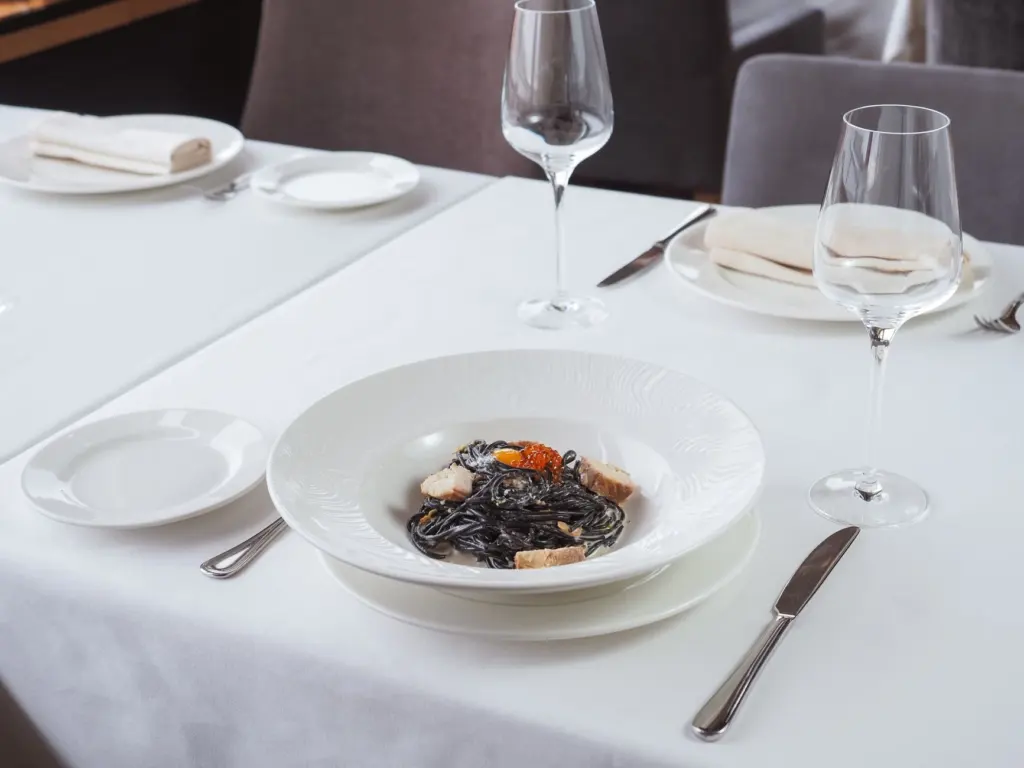
The wording is about effort, so use it that way. One star suits a diner who wants skilled cooking in a style they already enjoy, without building a trip around it. Two stars justify planning a day or an evening around the booking. Three stars describe a restaurant you would travel specifically to eat in. “In its category” ties the one-star judgement to the kind of restaurant it is, so a starred neighbourhood place is not being measured against a grand tasting-menu house.
| Common assumption | What the stars actually say | Planning use |
|---|---|---|
| More stars means a more comfortable evening | The levels describe cooking quality and how far it is worth travelling: a detour for two stars, a special journey for three stars | Choose the level by how much effort the meal deserves, not by how formal you want the room to be |
| Stars rate the whole experience, including the room | Stars judge the food only; atmosphere is commended separately | Read the written description if the setting matters to you |
| One star is a minor award | One star is “a very good restaurant in its category” | Treat it as a genuine quality marker for a specific style of restaurant |
Star wording comes from ECPI, and the food-only point from Richardson’s Climbing.
Myths about how inspectors judge a restaurant
Myth: stars reward the room and the service
Accounts differ on how much beyond the plate counts. ECPI describes Michelin’s inspectors evaluating all aspects of a restaurant, from the time it takes to be seated through staff politeness to the food and ambiance. Richardson’s Climbing states plainly that for stars, inspectors only judge the food, with atmosphere recognised through separate commendations. The practical reading for a diner is to treat the star as a cooking rating. A restaurant with a plain room can hold a star, and a beautiful room does not earn one.
Myth: a chef can prepare for the inspector
Inspectors stay completely anonymous while evaluating, so restaurants do not know when they are being assessed. The process is also not a single dinner. Richardson’s Climbing reports that an inspector visits a restaurant multiple times a year to check consistency over time, and El Cielo’s history of the guide says inspectors make several visits before reaching a decision. Inspectors also try to order dishes that need different techniques and ingredients, which makes it hard to shine with one signature plate.
A single inspector does not settle the higher levels. Two- and three-star ratings require the consensus of several inspectors, and inspectors meet annually at “Stars Meetings” to confer. The same source says Michelin can award or remove a star only with the consensus of the whole team.
Myth: the scoring rules are public
Michelin does not publish or reveal the specific criteria a restaurant must meet, according to ECPI. What is publicly known is the general list of things inspectors review, and the table below sets out how each one shows up on your plate.
- Quality of ingredients: the produce, fish and meat are judged on their own merits, so a dish cannot hide behind technique alone.
- Mastery of technique: sauces, timing and cooking methods are expected to be executed cleanly.
- Harmony of flavours: components should work together on the plate rather than compete.
- The chef’s signature: the cooking should have a recognisable personality. Burghardt frames the same idea as creativity.
- Consistency: Burghardt notes that a starred restaurant must offer the same excellent quality every time you visit, which is why repeat inspections matter.
The consistency point is the most useful one for diners. It means a star is a claim about reliability, not about one good night.

What happens when a star is lost
A star is a current rating, not a lifetime title. Because inspectors keep returning and judge consistency over time, a restaurant that slips can lose a star, and the same team-consensus rule applies to removing one as to awarding one. That safeguard means a loss reflects a group decision rather than one bad meal.
The stakes are real for the people involved. Richardson’s Climbing says earning and maintaining stars can be challenging even for the most skilled chefs. It also reports that losing a two-star rating was an emotional experience for celebrity chef Gordon Ramsay. As a diner, the lesson is practical: check the latest guide listing before you book, and do not rely on an older review or a plaque in the window to tell you the restaurant’s present standing.
Are starred restaurants expensive?
Often, yes, though the supplied figures only show a pattern, not a price list. The same Richardson’s Climbing article notes that many people cannot justify the cost of dining at a starred restaurant, since it is a lot of money for a single meal. As one concrete example, its author reports spending about $500 for two diners at a two-star restaurant, before ordering any wine. Wine, extras and tips come on top of a figure like that, so budget above the menu price.
That makes a starred meal a good fit for an occasion, or for a diner who wants to see what the cooking standard feels like. If your goal is simply a great meal at a lower cost, a starred room is not the only route. Our guide to The 2026 Guide To Types Of Food Restaurants: Find The Best Style For Any Meal – Bionicbites shows how other restaurant styles compare. If you would rather get the most from a single cuisine, What To Order At An Indian Restaurant: Smart, Flavorful Picks For First-Timers (2026) – Bionicbites is a practical starting point for ordering well.
Frequently asked questions
| Question | Answer |
|---|---|
| Can a restaurant anywhere in the world earn a star? | No. A restaurant must be located in one of the countries where Michelin operates to be considered, according to ECPI. |
| How many inspectors does Michelin have? | Richardson’s Climbing reports between 80 and 120 full-time Michelin Guide inspectors worldwide. |
| Do inspectors take notes at the table? | Not visibly. The same source says inspectors do not take notes while dining because that would be too obvious. |
| Is the Green Star the same as a Michelin star? | No. The Green Star, introduced in 2020, recognises restaurants committed to sustainability, according to El Cielo. |