The main types of food restaurants differ by how you order and pay: counter service (fast food, fast casual, bistro) or table service (casual and fine dining). Price rises as service and setting become more formal, so pick by time, budget and occasion.
Labels overlap and each venue wears several at once, so treat them as signals rather than guarantees. For the wider checklist of what to look for before you book or walk in, see how to choose a good restaurant.
How service style sorts restaurants
A restaurant-industry guide sorts the restaurant world into two main types: table service and counter service. The quickest way to tell which one you are standing in is the moment payment happens. According to a restaurant-startup guide, if customers order at a counter and pay before their food arrives, that is a quick service restaurant. If customers pay after their food is prepared, that is full service.
Service style is only the first layer. Beyond full service and quick service, the same guide notes, restaurants are further classified by cuisine, price point and atmosphere. A cuisine label tells you what is on the menu, while a service label tells you how the meal will run. Reading both together is what prevents a mismatch between what you want and where you end up.
Counter service
Limited-service restaurants prioritize convenience and faster order fulfillment, as a restaurant-equipment guide describes them. In practice you take on the ordering work yourself and give up table attention in exchange for speed. That trade suits meals where the food matters less than the time it takes, and it is the right default when you are in a hurry.
Table service
The full-service category is table service, and the same equipment guide places both casual dining and fine dining inside it. Because payment follows preparation, the meal unfolds at your table rather than at a counter. Choose this side of the divide when you want to sit, be served and set your own pace.
Counter-service types: fast food, fast casual and bistro
Fast food
Fast food restaurants are quick service concepts such as McDonald’s, Taco Bell and Fazoli’s, per the restaurant-startup guide. The price point is low, and dollar menus are common. That combination makes fast food the sensible pick for a budget meal or a short stop, and the weaker pick for any meal where you want to linger or be waited on.
Fast casual
Most fast casual restaurants follow the quick service model, with customers ordering and paying at a counter. The difference from fast food is price and positioning: fast casual tends to cost more than fast food but less than a traditional sit-down restaurant. It suits diners who want to keep the speed and the no-server format while spending a little more than they would at a fast food chain.
Bistro
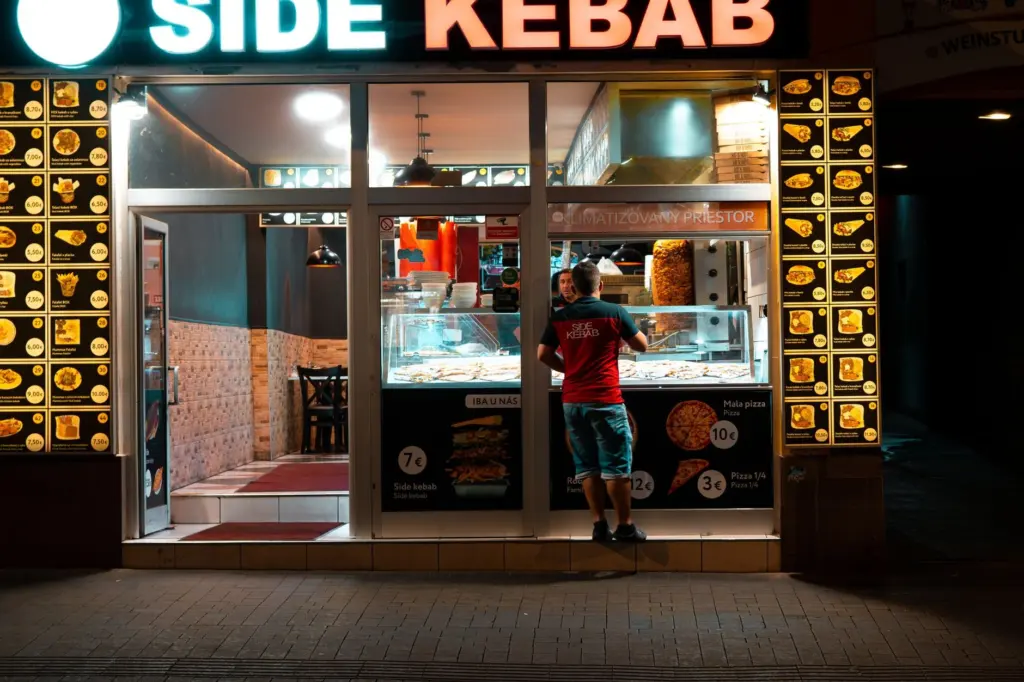
The bistro label can mislead. One restaurant guide classes the bistro as a limited-service establishment where guests typically order and pay at the counter before seating themselves. Its menus usually carry a higher price point than a fast-food restaurant. So a bistro sign does not promise a server, and it is worth checking how ordering works before assuming you will be waited on. Expect to spend more than at fast food while keeping the counter-first routine.
Table-service types: casual and fine dining
Casual dining
Casual dining is table service in the full-service category. On reservation-site listings its price range runs from one to three dollar signs, according to the restaurant-startup guide, which makes it the widest category on price.
The difference between fast casual and casual dining comes down to three things. First, ordering: fast casual customers order and pay at a counter, while casual dining customers are served at the table and pay after the food is prepared. Second, price: fast casual sits above fast food and below traditional sit-down, and casual dining spans a broad band that can stretch higher. Third, pace: a counter keeps the meal short, whereas a server lets a group stay. Pick fast casual for a step up from fast food without waiting on a server. Pick casual dining when you want to sit and be served.
Fine dining
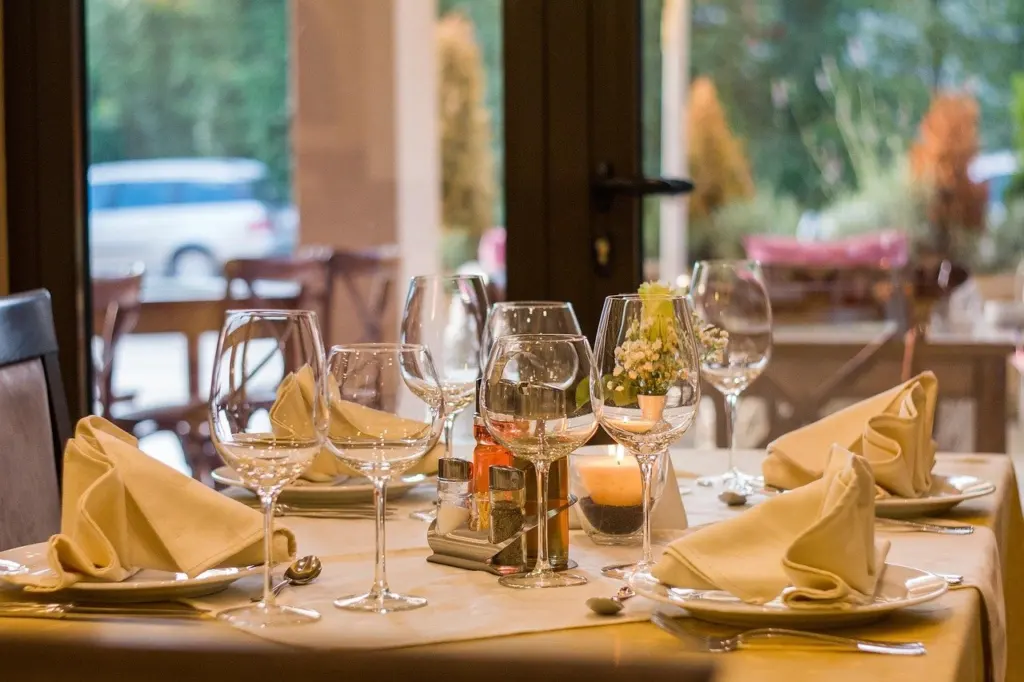
Fine dining restaurants are full-service restaurants marked by luxurious decor, discreet, attentive waitstaff and high-quality multicourse meals. Spending of $250 per person or more is not uncommon, the same guide says, and a second industry guide gives the price range as $$$-$$$$. That makes fine dining the one type where cost deserves its own planning, because the bill can be of a different order from every other style here.
Fine dining appeals to a wide customer base that includes travelers and special occasion diners, and it has fewer regular customers than casual restaurants. Treat it as a deliberate occasion choice rather than an everyday default. Some rooms in this tier also carry guide recognition, and What Is A Michelin Star Restaurant? The Insider Guide To What The Stars Really Mean (2026) – Bionicbites explains what those stars signify.
Comparison of the main types
The table lines up the four most common styles on how service works and what you can expect to spend, so you can compare them on the same terms.
| Type | How service works | Price signal | Planning use |
|---|---|---|---|
| Fast food | Order and pay at the counter before food arrives | Low; dollar menus are common | Budget meals when speed matters most |
| Fast casual | Mostly a quick service model: order and pay at a counter | Above fast food, below traditional sit-down | A step up in cost while keeping counter ordering |
| Casual dining | Table service; pay after the food is prepared | One to three dollar signs on reservation-site listings | A relaxed sit-down meal with a server |
| Fine dining | Full service with luxurious decor and multicourse meals | $250 per person or more is not uncommon | Special occasions, with the budget set in advance |
Service models and price signals follow the restaurant-startup guide and the restaurant-equipment guide; dollar-sign ranges come from reservation-site listings rather than fixed menu prices.
Concept restaurants and the other labels
A concept restaurant is defined by its overall idea rather than by a single service step. Choosing a restaurant concept affects nearly every part of the business, from the menu to the equipment behind the line, according to the equipment guide; the same source adds that it shapes staffing and what guests expect. For a diner, that means a concept venue is best read as a package in which the menu, the service style and the room were designed together. If one part of the package appeals, such as the food, check that the others suit your plans too.
The same logic applies to cuisine and atmosphere labels. They sit on top of the service model rather than replacing it, so a restaurant can be defined by its cuisine and still work as counter service or table service. When two places share a cuisine, the service style and price signal usually decide which one fits your evening.
Matching a type to occasion and budget
Work through these steps in order, because each one narrows the choice for the next.
- Decide how much time and effort you want to spend. If you want to order, eat and move on, stay on the counter-service side with fast food, fast casual or a bistro. If you want to settle in and be served, move to casual or fine dining.
- Set the budget before the type. Fast food is the lowest-priced option. Fast casual costs more than fast food but less than a traditional sit-down, which makes it a practical middle ground. Fine dining is the outlier, so plan it as an event rather than a default meal.
- Match the occasion. A celebration or a visit to a new city fits fine dining, which draws special occasion diners and travelers. An ordinary meal with friends fits casual dining. A short break between errands fits the counter. If the sit-down meal is breakfast, How To Order Eggs At A Restaurant: Get The Perfect Plate Every Time (2026 Guide) – Bionicbites helps you order a dish exactly the way you like it.
- Read the extra labels. Cuisine, atmosphere and concept tell you what the menu and the room will be like, so use them to break a tie between two types that both fit your time and budget.
No type is better in general. A fast food counter is the right answer to a short lunch break, and the same counter is the wrong answer to a celebration dinner. A few questions about timing, spend and setting will usually settle the choice before you look at a menu.
Frequently asked questions
Are drive-thru and kiosk orders a different type of restaurant?
No. They are ordering channels within limited service. The equipment guide lists ordering at the counter, at a kiosk, at a drive-thru or on a website as ways of reaching the same convenience-first model.
Do dollar signs on a listing reveal the restaurant type?
Only partly. Casual dining runs from one to three dollar signs on reservation-site listings, per the restaurant-startup guide, while another guide labels fine dining $$$-$$$$. The top of the casual range therefore overlaps with fine dining, so check the service style as well as the symbols.
Is family-style a type of restaurant?
No. Family-style describes how food is served rather than a price tier: instead of each diner ordering a dish, large orders are made for the table, as the restaurant-startup guide explains. Check the menu prices rather than relying on the label.